
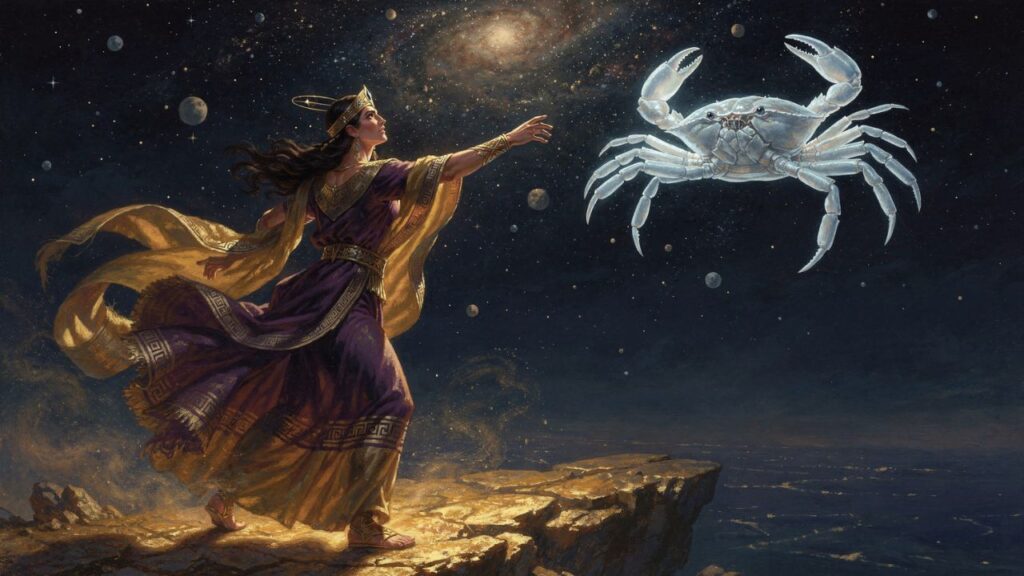
The Cancer constellation is the faintest of the zodiac, but it hides one of the richest stories in all of astronomy. The Chinese, the Egyptians, and the Greeks looked at the same patch of sky and saw nothing remotely alike.
By Juan Pablo Martín | ASTRONOMIKA TV | May 2026
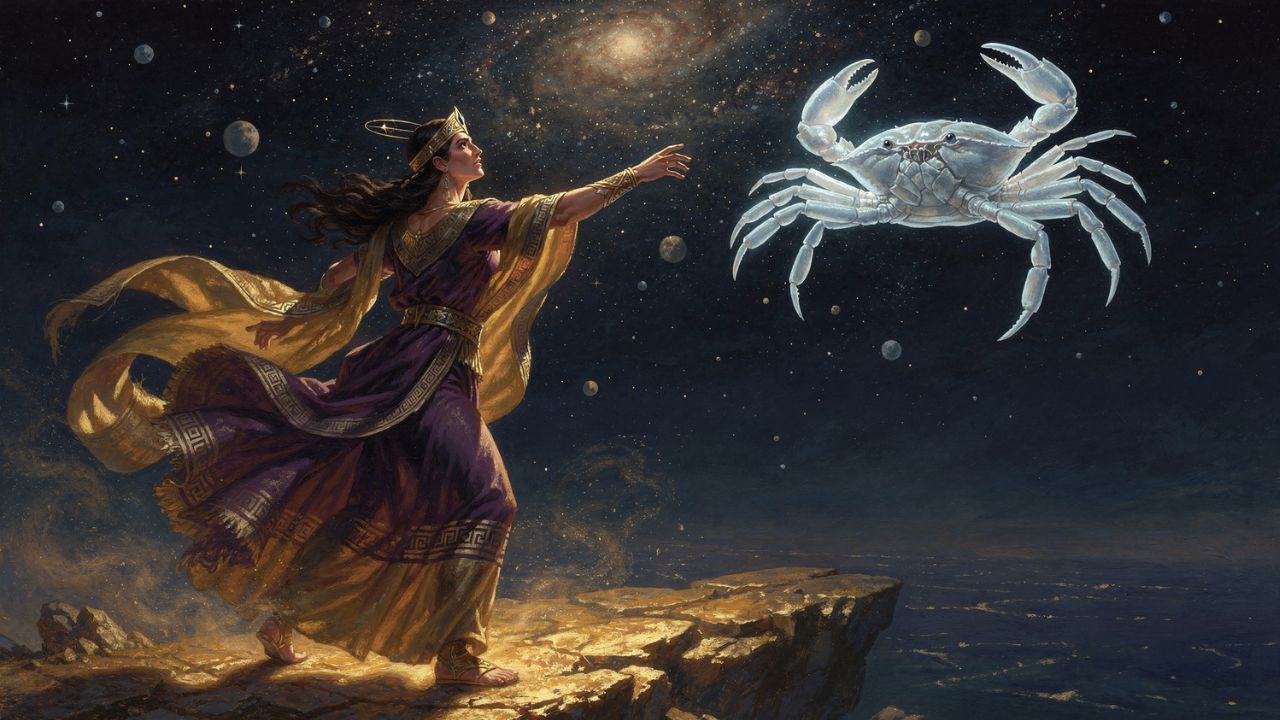
There are constellations that command attention. Orion with its three-star belt, Scorpius with its curved tail, Leo with its mane of bright stars. And then there is Cancer, the constellation that is barely visible at all, tucked between Gemini and Leo like someone sneaking into a photo without being invited. Discreet to the point of invisibility, with stars so faint they vanish at the slightest trace of artificial light.
And yet, Cancer hides one of the richest stories in the zodiac. A kamikaze crab, a wine god with his eternally drunk mentor, two donkeys who won a war without understanding it, a Chinese realm of ghosts, and the Egyptian god who defeats death every morning. All of that fits in the darkest corner of the zodiac.
Hera’s suicide crab
There is an unwritten rule in Greek mythology: if Hera sends you to do something, you are probably going to end up dead. The Olympian gods had armies, lightning bolts, and eternity to plan their revenge. Hera, however, had something more dangerous: infinite resentment and a sickening obsession with destroying every one of Zeus’s bastard children. And Zeus, it has to be said, was the kind of god who could not pass through a village without leaving at least one demigod behind. His children were scattered across Greece like souvenirs from his travels. Hera knew every one of them. And she had something waiting for each one.
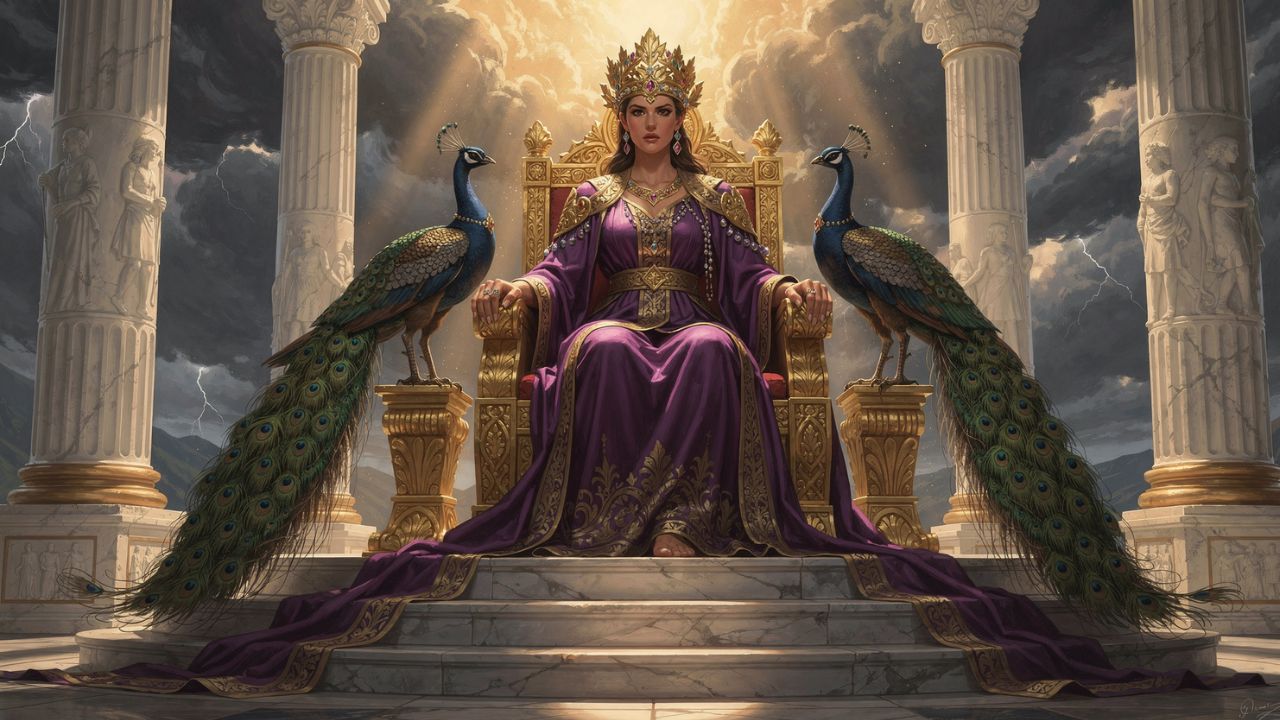
The favorite on her blacklist was Heracles, which is what the Greeks called the character the Romans later renamed Hercules when, true to their habit, they appropriated the entire Greek mythology and changed all the names. Heracles was born with the misfortune of being exactly what Hera hated most: living proof that her husband could not stay still. Son of Zeus and the mortal Alcmene, he came into the world marked before he was even born. From the time he was a baby, Hera tried to kill him. She sent snakes to his crib. It did not work. Heracles strangled them before he learned to walk. The pattern was set from then on: Hera plans, Heracles survives, Hera accumulates more hatred.
Years later came the moment Hera had been waiting for. The gods decided Heracles had to atone for his crimes by completing twelve impossible labors. The second was to kill the Hydra of Lerna, a nine-headed serpent that regenerated two heads for every one cut off. A monster specifically designed to be immortal. The perfect job for the man you wanted to see dead.
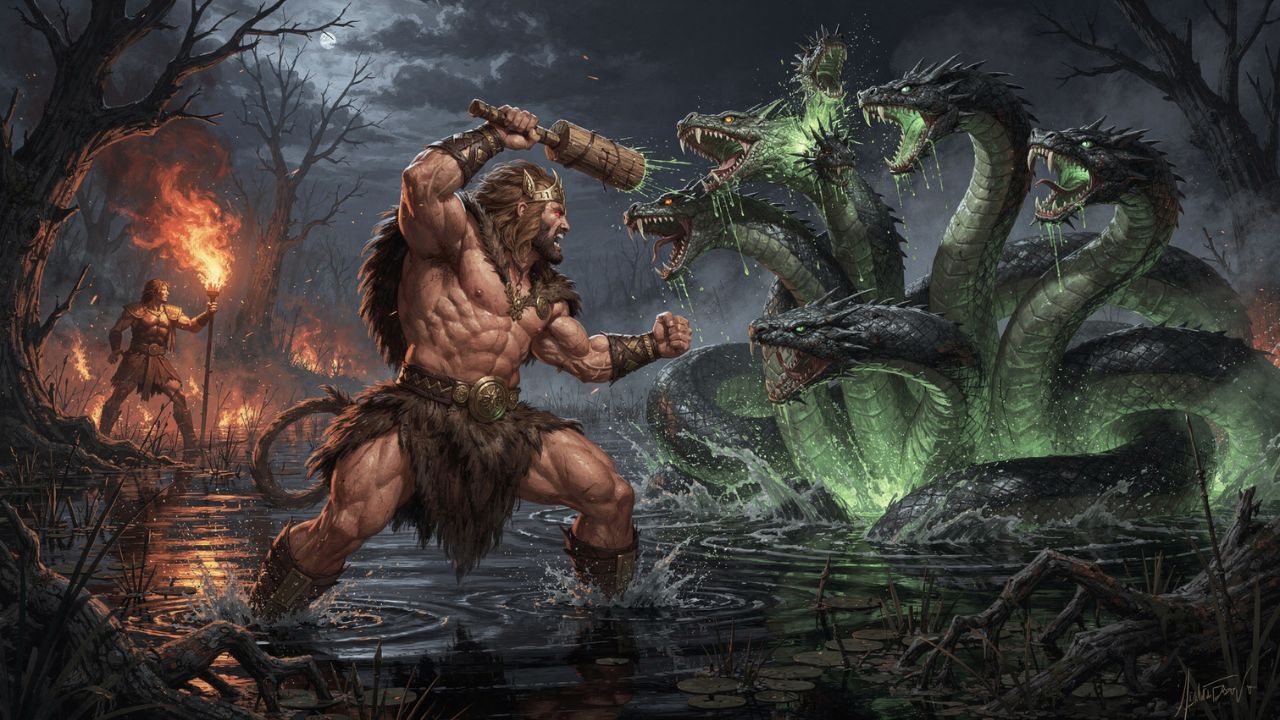
Heracles showed up to the fight with his nephew Iolaus. The battle was titanic: every severed head produced two more, the swamp reeked of venom, and the hero was starting to find his rhythm when Hera, watching from Olympus, made an executive decision. If Heracles was going to win anyway, she could at least make things harder for him. So she sent her secret agent: a giant crab with instructions to pinch the hero’s foot and distract him at the decisive moment.
What followed was the shortest and most useless mission in all of Greek mythology.
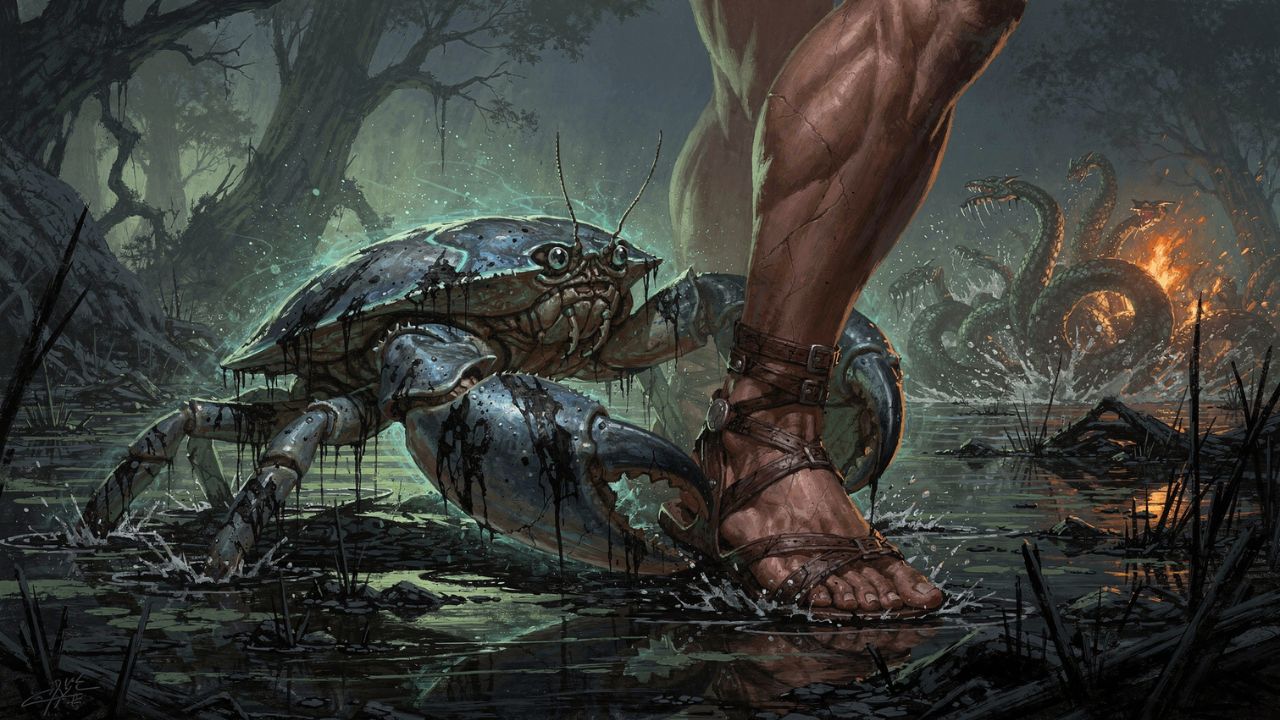
The crab emerged from the swamp, found Heracles’s foot, and pinched it with all the conviction of a soldier following orders. Heracles, without even bothering to look down, crushed it. One stomp. No drama, no struggle, no glory. The crab died doing exactly what it had been asked to do, in complete anonymity, crushed under the heel of the strongest man in the world.
Hera, who despite everything had a peculiar code of honor, recognized the gesture. The crab had obeyed. It had died in the attempt. That deserved a reward. She took it and threw it into the sky, where it was immortalized forever as the Cancer constellation.
Immortality. A cosmic consolation prize.
Although you have to read the fine print: Hera placed it in the darkest, most forgotten corner of the entire zodiac, surrounded by stars so faint that the constellation practically disappears at any trace of light pollution. It is the hardest zodiac constellation to spot with the naked eye. Immortality, yes. But invisible. Even in her generous gestures, Hera could not help being Hera.
In older versions of this story, the Babylonians already knew this region of the sky millennia before the Greeks and called it Allul, a watery creature whose exact nature, crab, turtle, or river monster, was never entirely clear. It is likely the Greeks borrowed the constellation and simply layered their own drama on top of it. Which, thinking about it, was exactly what they did with everything.
The crab and Hera make up one complete story, with a beginning, a middle, and an end. But the Greeks gave Cancer a second narrative layer, a different myth, with no connection to Hera or Heracles, one that gets far more enthusiasm in the original sources because it brings together all the right ingredients: a wandering god, an eternally drunk mentor, two donkeys, and one of the most ridiculous victories in cosmic history.
The donkeys that won a war with noise
To understand why there are two stars called “the northern donkey” and “the southern donkey” flanking the richest cluster in the zodiac, you first have to talk about Dionysus. And to talk about Dionysus you have to start at the beginning, which in his case is fairly complicated.
Dionysus was the god of wine, ecstasy, and creative chaos. Son of Zeus, naturally, because Zeus never wasted an opportunity. His mother was Semele, a mortal princess who died struck by Zeus’s glory before Dionysus was born. The baby was rescued, sewn into his father’s thigh to complete the gestation, and eventually handed over to the nymphs of Mount Nysa to be raised away from Hera’s radar. Who, as we already know, sooner or later found everyone.
Hera found him. She sent him madness, her favorite weapon against Zeus’s children. Dionysus wandered the world for years in a state of divine insanity, traveling through Egypt, Syria, and Asia Minor, spreading the cult of wine and gathering a following as peculiar as he was. Among them, the most endearing was Silenus.
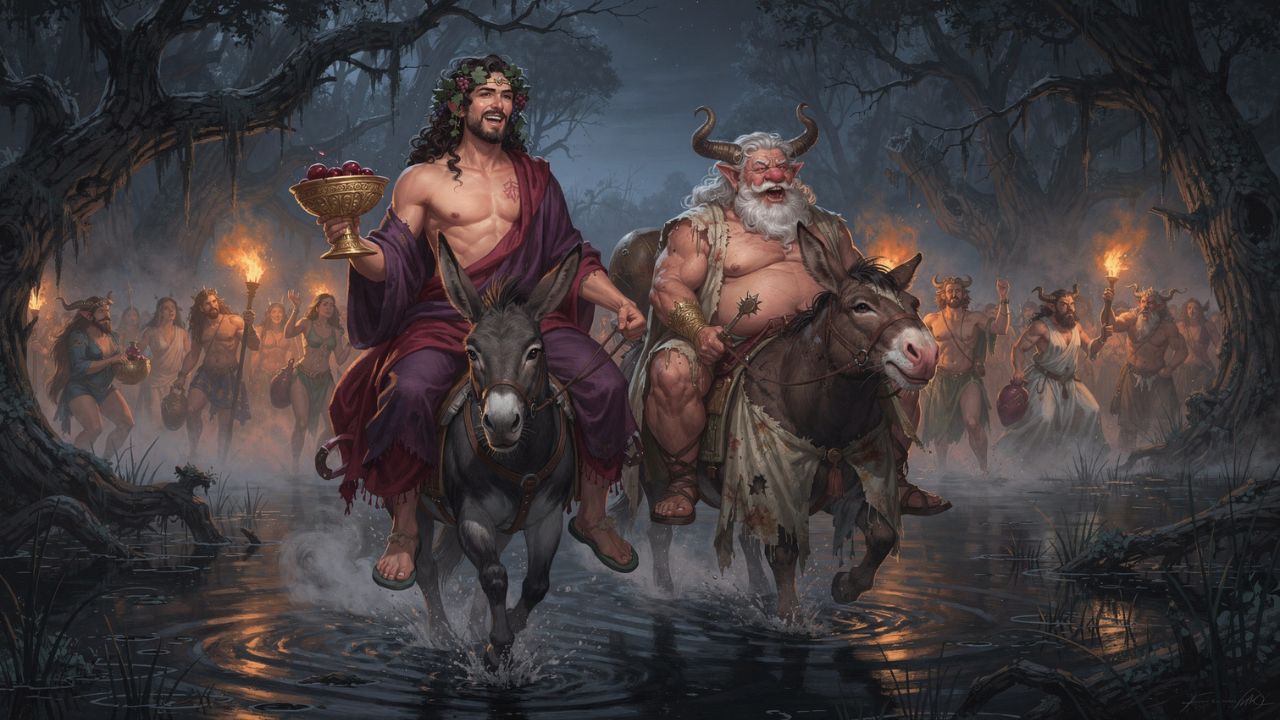
Silenus was Dionysus’s tutor, mentor, guardian, and lifelong companion. He was also, according to the Greeks, the spirit of drunkenness made flesh: the closest a civilization could get to giving eternal intoxication a name, a face, and a belly. He was old, he was fat, he was wise with that uneven wisdom that only comes from living too long and drinking even more. He was never seen sober and never seen on foot: Silenus always rode a donkey because his legs, at best, were an unreliable proposition. The donkey put up with all of it with the resignation of someone who has no other option.
Then came the Gigantomachy, the epic war between the Olympian gods and the Giants, primordial creatures born from the blood of Uranus who threatened to tear down the order of the cosmos. Every god was summoned to battle. Including Dionysus and his retinue, who showed up riding donkeys, with the enthusiasm of people who were probably not in the best state to evaluate danger.
The army had to cross a swamp to reach the front line. Dionysus, Silenus, and the rest climbed onto the donkeys to keep their feet dry, which was exactly the level of tactical planning you would expect from that group. What the sources do not specify, but logic strongly suggests, is what state the donkeys were in by that point in the night. Because a retinue led by the god of wine and the spirit of drunkenness, crossing a swamp in the dark, on the way to a war, is not the kind of expedition where anyone worries about the sobriety of the mounts.
And then the donkeys bellowed.
Here it is worth pausing for a moment. Everyone has heard a donkey bray. It is not scary. If anything, it is funny. But there is a fundamental difference between the bray of an ordinary donkey and the bray of a donkey that has spent hours in the company of Dionysus, Silenus, and the rest of that caravan. A sober donkey produces a perfectly identifiable sound. A donkey that has spent the night absorbing the fumes of Olympus’s most chaotic entourage produces something entirely different: a noise nature should not allow, one with no name in any known language, and one that, in the darkness of a swamp, coming from nowhere, could easily sound like the end of the world.
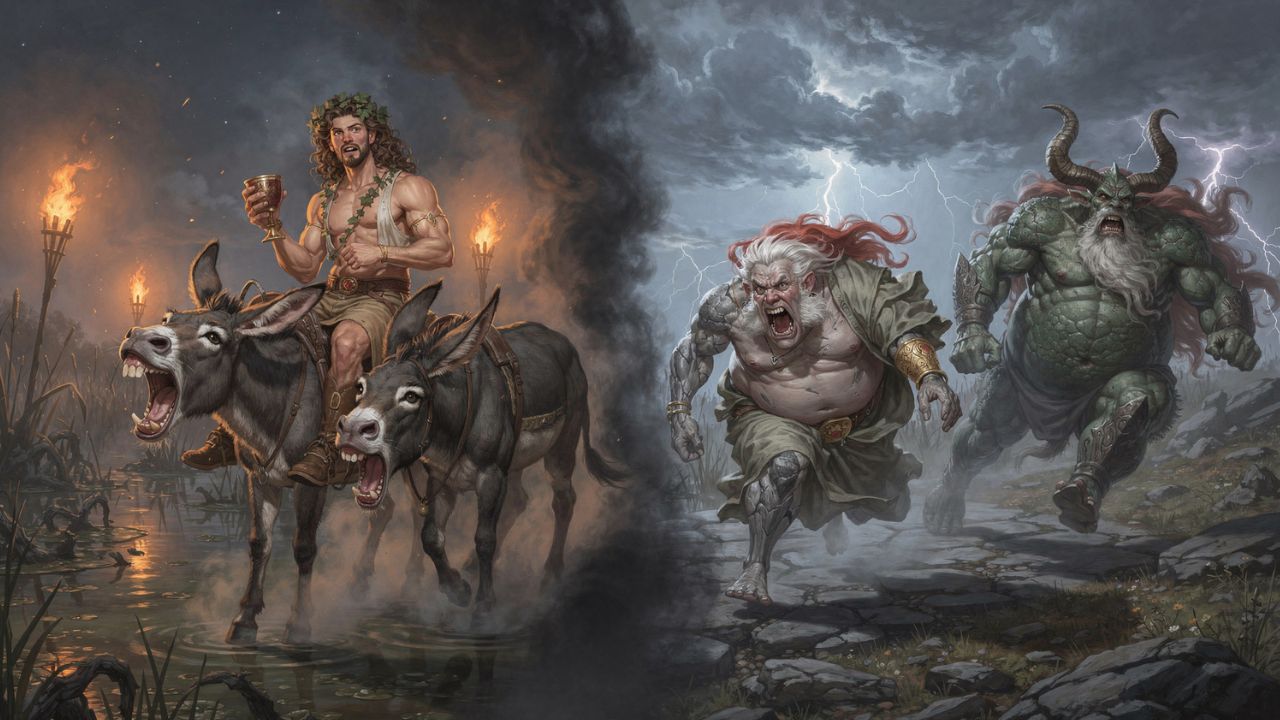
The Giants, primordial creatures who had existed since before the order of the cosmos, had never heard anything like it. They fled in a panic.
The gods won the battle. Not through strategy, not through strength, not through Zeus’s lightning bolts. They won it because two donkeys, under circumstances no one bothered to fully document, produced the most terrifying sound the Giants had ever heard in their eternal existence. The official story says they simply bellowed. But the official story, in this case, is probably underselling it.
Dionysus, grateful in a way few gods bothered to be, immortalized the two donkeys in the sky. There they still are: Asellus Borealis, the northern donkey, and Asellus Australis, the southern donkey, flanking M44. The Greeks called that cluster Phatne, the Manger, because that makes the image work: two donkeys eternally feeding from a manger full of stars. In Latin the name changed to Praesepe, which means exactly the same thing. Today we know it as the Beehive, because when Galileo first looked at it through his telescope in 1609 and resolved forty stars where there had only been mist, the image reminded him of a swarm of bees. Two names for the same object: the Manger when we talk about myth, the Beehive when we talk about science. In this article we use both, because both tell something true.
China and Egypt: death and rebirth in the same sky
The Greek crab has hogged the spotlight for centuries. But while the Greeks saw a kamikaze crustacean and a manger of drunken donkeys, on the other side of the world two civilizations were looking at exactly the same patch of sky and seeing radically different things. One saw the realm of the dead. The other saw the gate of eternal life.
China: the sky of ghosts
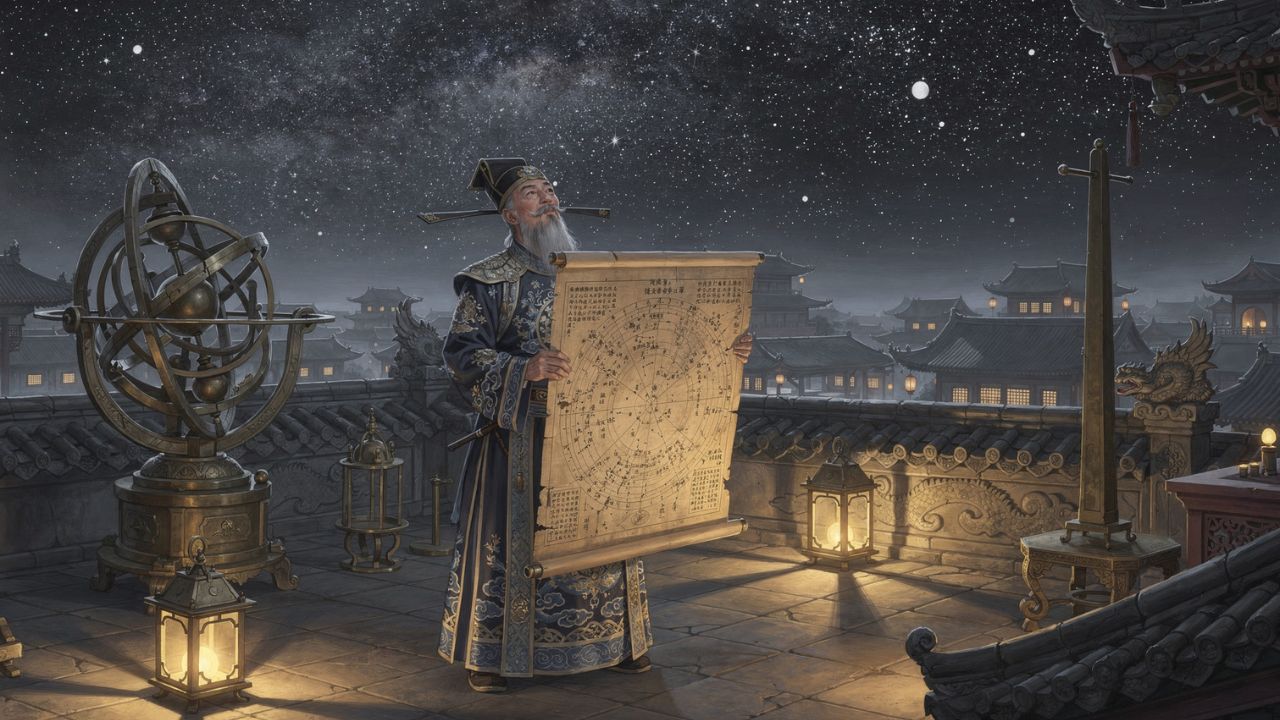
The ancient Chinese divided the sky into twenty-eight lunar mansions, each with its own name, its own meaning, and its own weight in the order of the cosmos. The twenty-third mansion, the one corresponding to the region we now call Cancer, was called Guǐ.
Guǐ means ghosts. Spirits of the dead, to be more precise.
The four stars surrounding M44, the same ones the Greeks would later turn into a manger with two donkeys, formed for the Chinese the figure of a specter, a bodiless presence floating in the darkness of the sky. It was not a decorative metaphor or a poetic name. In Chinese cosmology, Guǐ was literally the place where the spirits of the ancestors resided, an open window between the world of the living and the realm of the dead.
And at the center of that ghostly figure was the Beehive.
The Chinese called the cluster Jīshī, which translates as “pile of corpses” or “cluster of accumulated bodies.” A thousand stars crammed into one point in the sky, seen from Earth as a shapeless nebulous smudge, and Chinese astronomers saw exactly what the image suggested: a heap of nameless souls floating in eternity. The full picture, the four ghostly stars plus the cluster of corpses at the center, formed the image of a ghost being carried in a sedan chair. They called it Yugui: the ghost carriage.
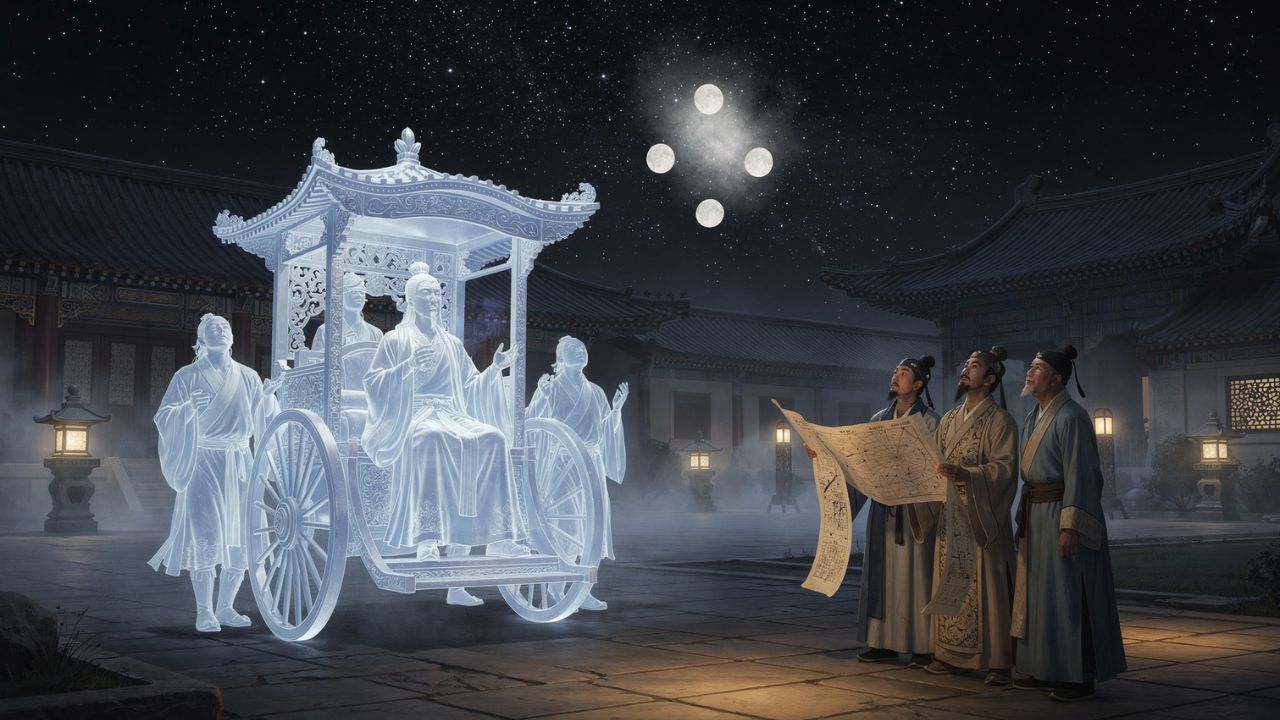
The contrast with Greece could not be more brutal. The Greeks put a manger there. The Chinese put a funeral procession.
And yet both were looking at exactly the same stars, on the same night, with the same human eyes trying to make sense of the same indifferent universe. That one saw a feeding trough and the other saw a funeral cortege says more about the two civilizations than any history book.
Egypt: the beetle that carries the sun
A few thousand kilometers west of Babylon, in the Nile valley, the Egyptians also knew this corner of the sky. And what they saw there had nothing to do with crabs, donkeys, or ghosts.
They saw a beetle.
Specifically, they saw Khepri, the scarab god, one of the forms the sun took in its eternal cycle of death and rebirth. Khepri was the morning sun, the star that emerged each morning from the underworld after having died the night before. His name in ancient Egyptian comes from the verb kheper, meaning “to become,” “to transform,” “to come into existence again.” Khepri was not just a god. He was the very concept of resurrection given form.
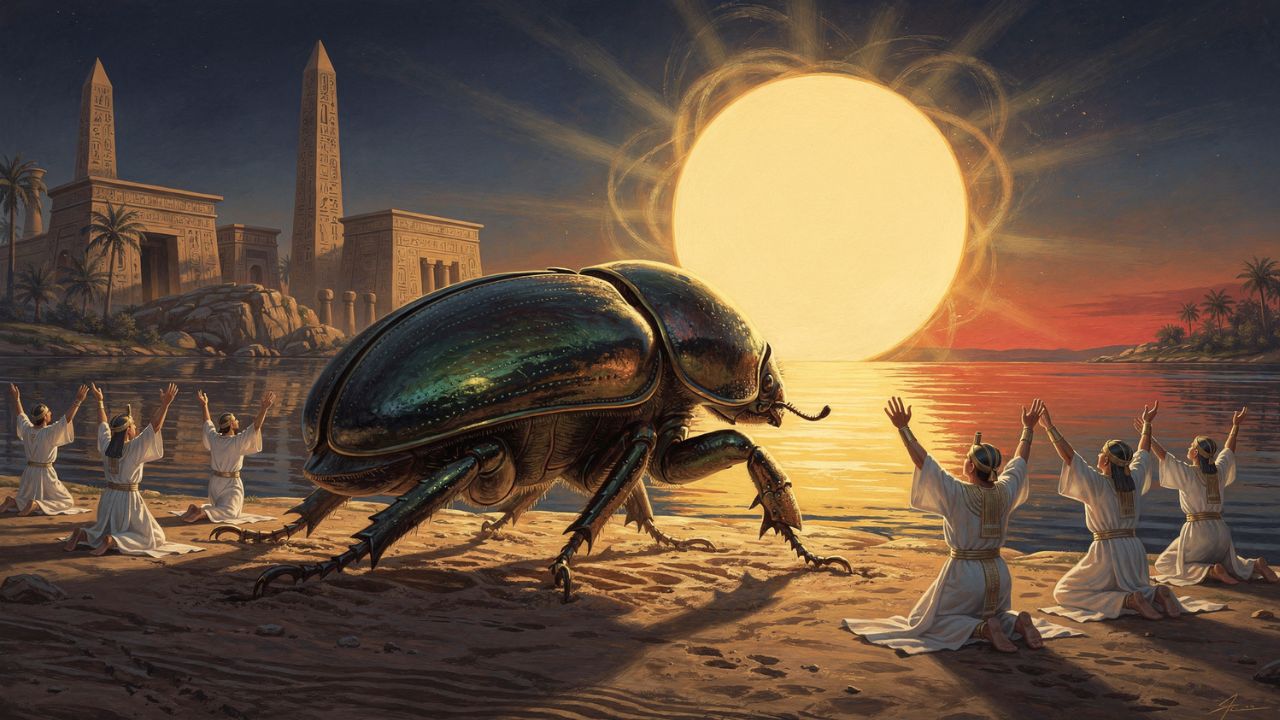
The connection with the beetle was not arbitrary. The Egyptians watched how the dung beetle pushed its ball of dung across the ground, and saw in that gesture the perfect image of the sun being pushed across the horizon each morning. The same way the beetle rolled its sphere across the earth, Khepri rolled the solar disk across the sky. Inside that ball of dung, the beetle also laid its eggs, and from the humblest matter new life emerged. Death, transformation, rebirth. The complete cycle of the universe summed up in an insect pushing a ball of dirt.
The scarab became one of the most powerful symbols of ancient Egypt. The amulets shaped like scarabs, the heart scarabs placed on the chests of mummies, the royal seals carved in stone, all carried the same promise: what dies can come into existence again.
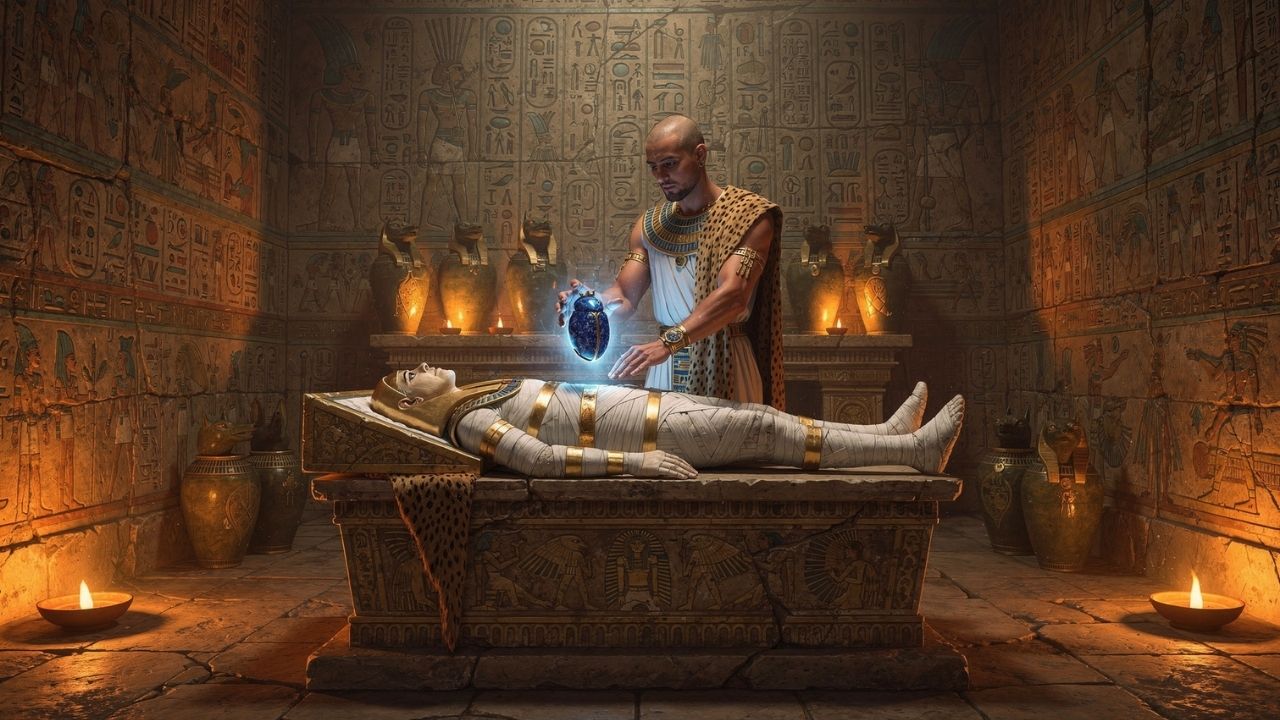
Now think about the contrast. In the same point of the sky where the Greeks placed a crab that died crushed, without glory or honor, the Egyptians placed the god of eternal resurrection. Where Hera placed a symbol of useless death, Egypt placed the symbol that death is not the end.
Same stars. Two ideas that could not be more opposed.
And perhaps the most interesting part of all is that Cancer sat for centuries at the highest point of the zodiac, the spot where the sun reached its maximum height at the summer solstice. For the Egyptians, that moment of the year was sacred. The sun at its highest point, in the sky of the beetle, pushing the celestial vault with all its strength. Khepri at his most glorious moment.
The Greeks placed a crushed crab there. The Egyptians placed the god who defeats death every morning.
The difference in perspective, it has to be said, is considerable.
Without coordinating, without knowing each other, without even knowing the other existed, three civilizations built the complete cycle of human existence into the same handful of stars. The Greeks placed useless death, the sacrifice no one remembers. The Chinese placed transit, the realm of those who are no longer here. The Egyptians placed the promise that nothing ends entirely, that what dies at dusk can come into existence again at dawn. Life, death, and resurrection, written into the darkest, most forgotten corner of the zodiac.
And flanking all of that philosophical weight, calmly feeding from their Manger of a thousand stars, two immortal donkeys who that night won a war without fully understanding what was happening. Just like every hero, if we are being honest.
M44: a thousand suns in the backyard of the zodiac
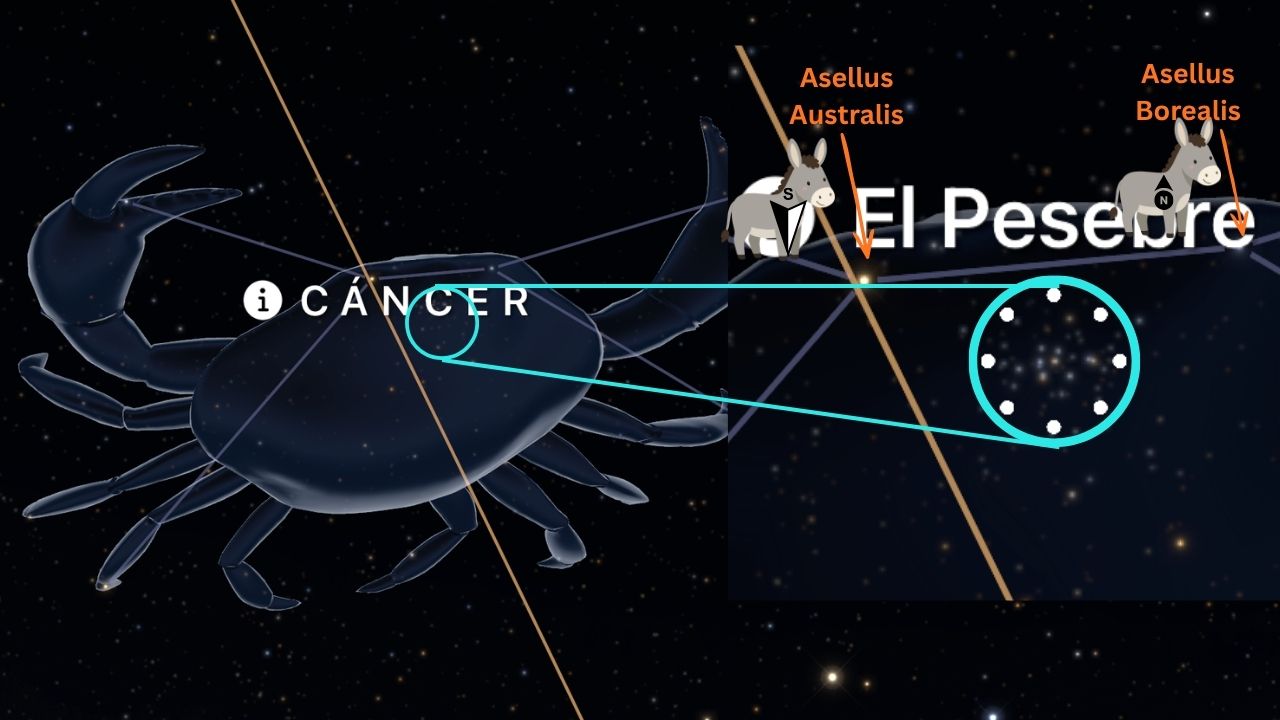
All of that mythology, all of that cosmic drama of crushed crabs, floating ghosts, divine beetles, and donkeys of questionable sobriety, revolves around a real object. One you can actually see tonight if you know where to look and have a dark enough sky. And when you see it, when you really see it, you understand why five different civilizations felt the need to invent a story for it.
The Beehive sits about 577 light years from Earth. To put that in perspective: if you could travel at the speed of light, it would take you 577 years to get there. The light you see tonight when you look at M44 left there before Christopher Columbus had even set sail from Palos de la Frontera. That light has been traveling since before America was America.
And what produces that light is roughly a thousand stars gravitationally bound to each other, moving together through space as if they were a single thing. A thousand suns. Most of them smaller and fainter than ours, red dwarfs that shine with the discretion of something that knows it will outlast everything else by billions of years. But the cluster also has blue-white giants, young and voracious stars that burn through their fuel at a scandalous rate and shine with an intensity that makes our Sun look like a birthday candle.
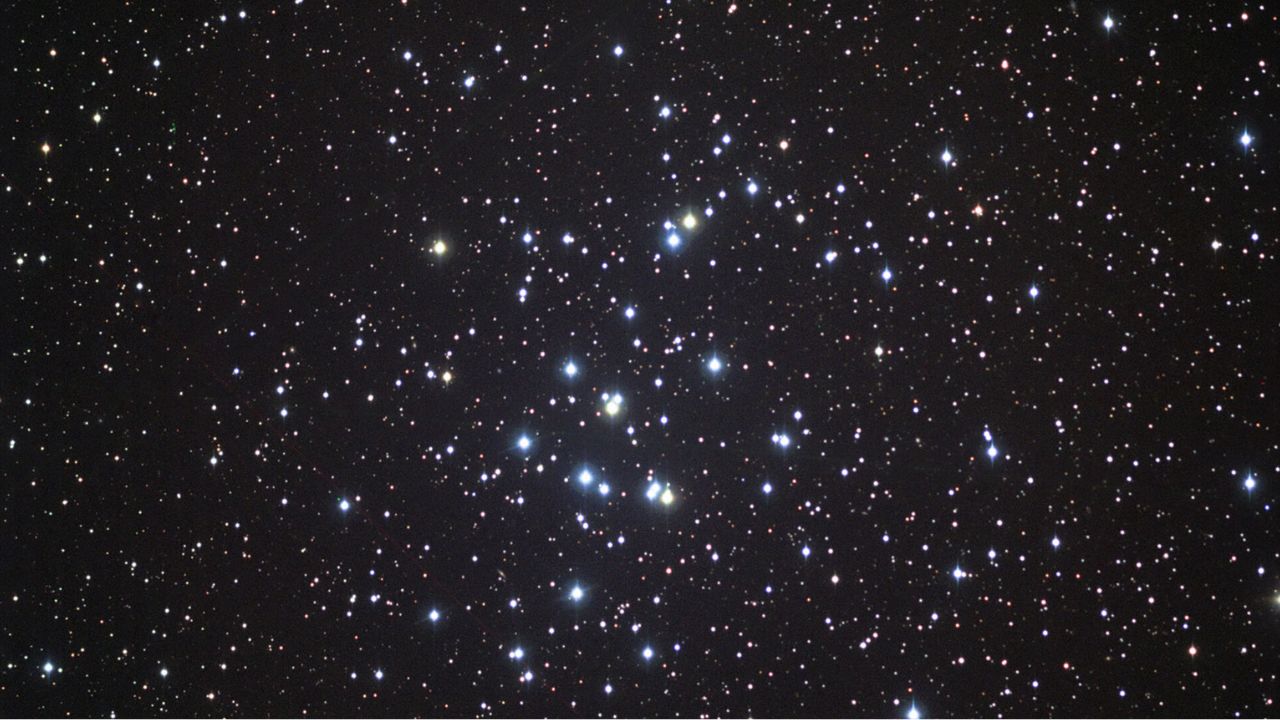
The cluster is about 600 million years old. If Earth’s entire age were a single 24-hour day, the Beehive formed just three and a half hours ago. A newborn, compared to the rest of the neighborhood.
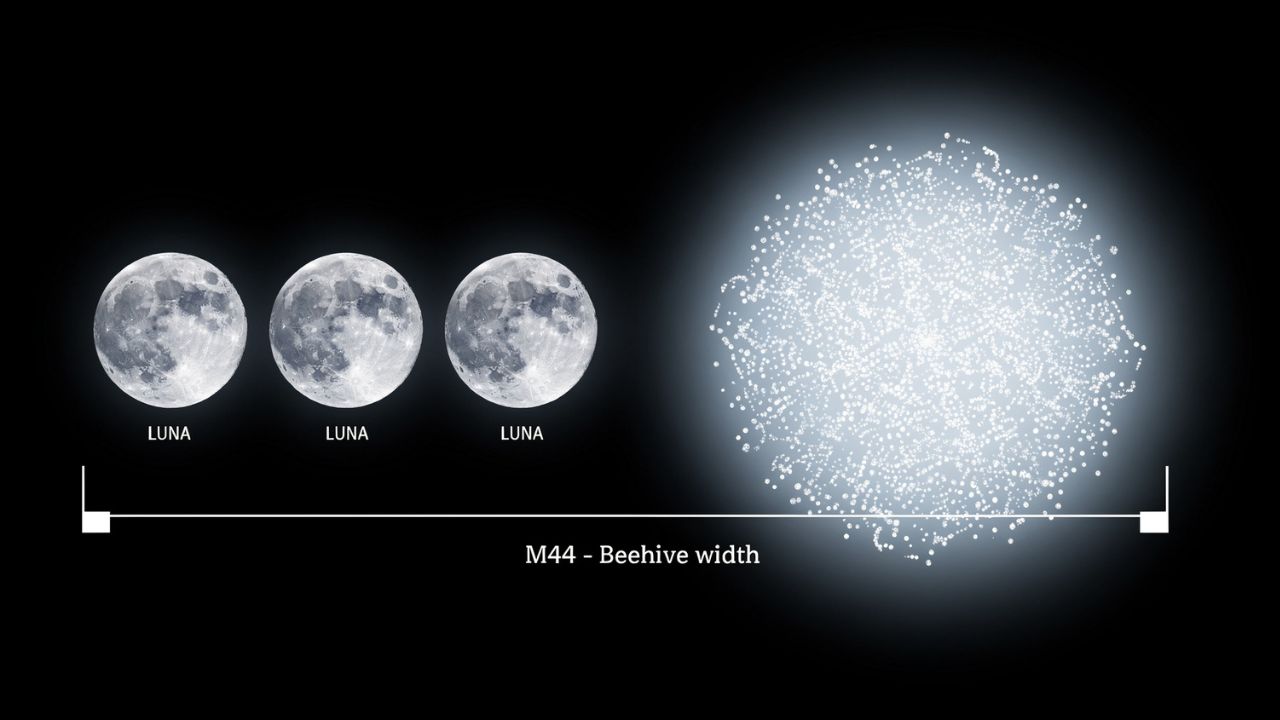
M44 covers an area in the sky equivalent to three full moons placed side by side. It is one of the closest open clusters to Earth and contains more stars than most of the clusters in its cosmic neighborhood.
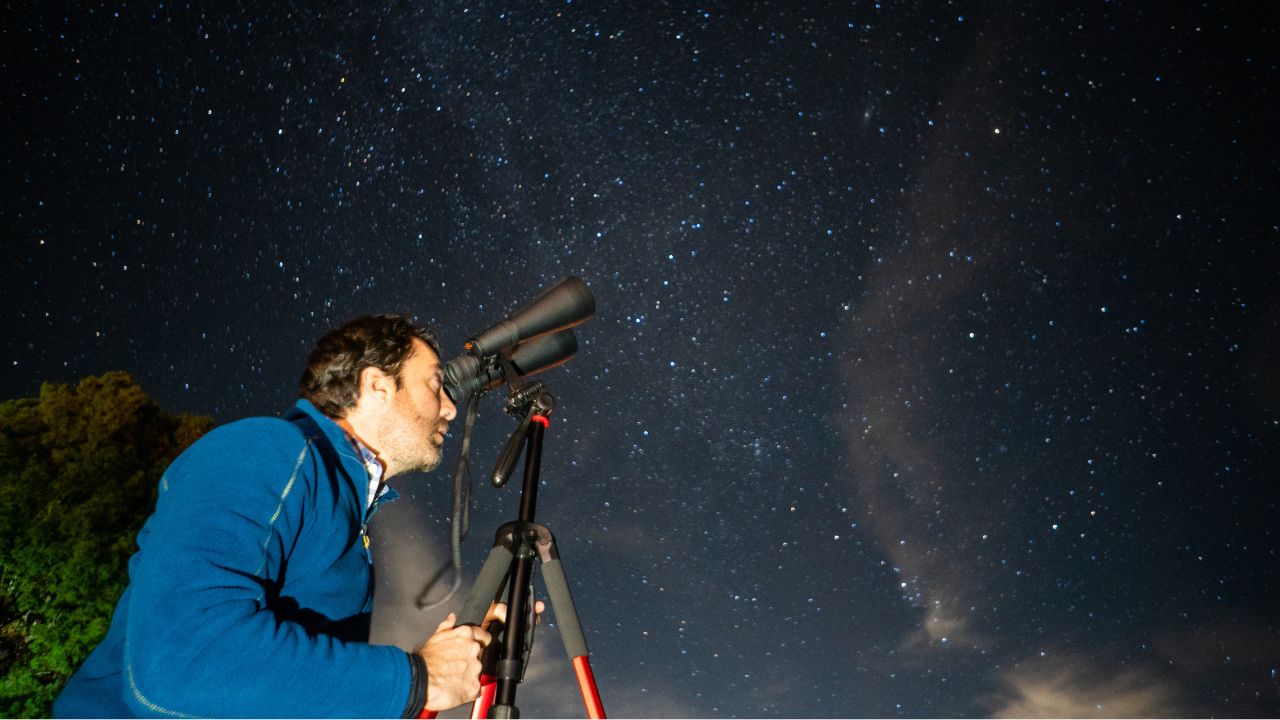
With a pair of CELESTRON Cometron 7×50 (Mexico | United States | Spain) on a moonless night far from the city, the Beehive turns into one of the most accessible spectacles in the sky: dozens of stars suddenly resolved where before there was only a nebulous smudge, scattered in patterns the human eye inevitably tries to turn into shapes. The Greeks saw a manger. You will see whatever your brain decides to invent that night.
With the CELESTRON NexStar 8SE (Mexico | United States | Spain) the experience shifts scale. The cluster is so large that at medium magnification it starts spilling out of the field of view, so the best approach is low magnification, letting the stars fill the eyepiece. Under dark skies, the blue-white stars at the cluster’s center contrast against the orange ones at the edges in a way the human eye enjoys more than any camera can capture.
And if you want to bring a keepsake home, the ZWO Seestar S50 (Mexico | United States | Spain) captures the Beehive with context and color in just a few minutes: the whole cluster in a wide field, the brightest stars saturated in blue and white and the faintest ones emerging from the background as if the sky were full of luminous dust. Which, basically, it is.
The donkeys have their own story to tell
Asellus Borealis and Asellus Australis, Dionysus’s two immortal donkeys, are not just mythological characters. They are real stars with their own physical stories.
Asellus Australis, the southern donkey, is an orange giant about 136 light years away. Its Babylonian name, Arkushanangarushashutu, is the longest known star name in any language. It translates roughly as “the southeast star in the crab.” The Babylonians, to their credit, did not waste time on poetry.
Asellus Borealis, the northern donkey, is a white type A star about 181 light years away. Younger, hotter, more modest in name but just as present in the sky.
The two flank the Beehive just as they have since the Greeks decided that arrangement made sense. And if you point a pair of binoculars at that region of the sky on a dark night, you will see them exactly where the mythology placed them: one on each side of the Manger, as if they were still feeding.
The constellation that barely exists
Cancer holds the dubious honor of being the hardest zodiac constellation to spot. Its brightest star, Altarf, reaches only magnitude 3.5, which in practical terms means it disappears completely, swallowed by light pollution from any mid-sized city. To find Cancer with the naked eye you need a genuinely dark sky, the kind that gets harder to find every year.
There is a perfect irony here. The constellation the ancients placed at the highest point of the zodiac, the spot where the sun reached its peak glory at the summer solstice, is today practically invisible to most of humanity. Hera chose her corner well.
The best time to look for it is February through May in the northern hemisphere, when Cancer reaches its highest point in the night sky. In the southern hemisphere, August through November. In both cases, look for the empty space between the bright constellations of Gemini to the west and Leo to the east. Cancer lives right there, in that gap, as if the zodiac had left a blank space and someone filled it in reluctantly.
And at the center of that nearly empty space, invisible to the naked eye from most places where people live today, sits the Beehive. A thousand suns waiting for you to get far enough from the lights to see them.
For objects like the Beehive, sky darkness matters more than telescope aperture. A truly dark sky with modest binoculars beats any large instrument under polluted skies.
Cancer is the constellation nobody sees. The faintest in the zodiac, the most overlooked, the one occupying the space between two bright neighbors like someone sitting between two celebrities in a photo. And yet, it hides one of the richest and closest star clusters in the sky, a thousand suns packed together 577 light years away, flanked by two immortal donkeys and surrounded by more mythology per square inch than any other zodiac constellation, with echoes reaching all the way to Scorpius and Orion, two zodiac neighbors with their own stories of capricious gods.
A crab that died in a single stomp. Two donkeys who won a war without understanding it. A Chinese realm of ghosts. The Egyptian god who defeats death every morning. All of that fits in a corner of the sky that, for centuries, almost no one could find.
If you want to see all of this with your own eyes, find us on YouTube, Instagram, and TikTok as ASTRONOMIKA TV. There you will find observation guides, stories like this one, and a lot more about the sky we all share.
Frequently asked questions about the Cancer constellation
What is the Cancer constellation?
Cancer is a zodiac constellation located between Gemini to the west and Leo to the east. Its name means “crab” in Latin, and it is the faintest of the twelve zodiac constellations. Despite being so discreet, it contains one of the richest and closest star clusters to Earth: M44, the Beehive.
Why is Cancer so hard to see?
Because none of its stars exceed magnitude 3.5. Its brightest star, Altarf, is barely visible to the naked eye under ideal conditions and disappears entirely under light-polluted skies. It is the zodiac constellation with the faintest stars of all.
What is the Beehive cluster or M44?
M44, also known as the Beehive or the Manger, is an open cluster of roughly a thousand stars located about 577 light years from Earth. It is one of the closest star clusters to the Solar System and is about 600 million years old. To the naked eye it appears as a nebulous smudge; through binoculars it resolves into dozens of stars.
How can I see M44 with binoculars?
Look for the empty space between Gemini and Leo. In that gap is Cancer, and at the center of Cancer is the Beehive. You need a dark sky, away from light pollution. With a pair of 7×50 binoculars on a moonless night, the Beehive turns into a field of dozens of resolved stars where before there was only a smudge of light. Sky darkness matters more than instrument power.
What are Asellus Borealis and Asellus Australis?
They are the two stars flanking the Beehive in the sky. Their names mean “the northern donkey” and “the southern donkey” in Latin. In Greek mythology they represent the donkeys that Dionysus and Silenus rode during the Gigantomachy, the war between the Olympian gods and the Giants. Their bray, under circumstances the sources prefer not to detail too much, scared off the Giants and decided the outcome of the battle.
What does Cancer mean in Chinese astronomy?
In Chinese astronomy, the Cancer region corresponds to the lunar mansion Guǐ, which means “ghosts” or “spirits of the dead.” The four stars surrounding the Beehive formed the figure of a specter, and the cluster itself was called Jīshī, which translates as “pile of corpses.” The full picture was interpreted as a ghost being carried in a sedan chair, the Yugui or ghost carriage.
What did the Egyptians see in the Cancer constellation?
The Egyptians associated this region of the sky with Khepri, the scarab god, a symbol of the rising sun and eternal resurrection. Khepri represented transformation and rebirth, the promise that what dies at dusk can come into existence again at dawn. It is the most striking contrast with the Greek version: where Greece placed a symbol of useless death, Egypt placed the god who defeats death every morning.
What months is the Cancer constellation best seen?
In the northern hemisphere, Cancer is most visible from February to May, when it reaches its highest point in the night sky. In the southern hemisphere, the best months are August through November. In both cases, look for the gap between Gemini and Leo: Cancer lives right there, discreet and nearly invisible, with the Beehive shining at its center more than all of its own stars combined.
How many stars does the Beehive cluster have?
M44 contains roughly a thousand stars gravitationally bound to each other. Most are red dwarfs, small and long-lived. About thirty percent are Sun-like stars, and the most visually striking are the blue-white giants at the cluster’s center. Five red giants and at least eleven white dwarfs also belong to the family.
This article contains affiliate links. If you purchase through them, I receive a small commission at no additional cost to you.
Sources and recommended reading
Books
Ridpath, I. (2018). Star Tales. Lutterworth Press.
The most complete and accessible reference on stellar mythology in English. Ridpath documents the stories behind every constellation with academic rigor and clear prose. The Cancer section is the primary source for Eratosthenes’s account of the donkeys and the Gigantomachy.
Allen, R.H. (1963). Star Names: Their Lore and Meaning. Dover Publications. (Original edition 1899.)
The classic dictionary of star names. Irreplaceable for tracing the origin of names like Asellus Borealis, Asellus Australis, and Praesepe across Greek, Latin, Arabic, and Babylonian cultures.
Digital sources
NASA Science / Hubble Messier Catalog: Messier 44
science.nasa.gov, Messier 44
Official technical sheet on M44 with distance, age, stellar composition data, and Hubble imagery. Primary source for all the cluster’s physical data mentioned in this article.
Ridpath, I. Star Tales: Cancer
ridpath.com, Star Tales: Cancer
Digital version of the Cancer chapter, with the original Eratosthenes and Ptolemy sources on the Praesepe cluster and the donkey story in the Gigantomachy.
IAU: International Astronomical Union, Star Names
iau.org, Naming Stars
Official source for approved star names, including Asellus Borealis, Asellus Australis, and Tarf.
Constellation Guide: Praesepe, Messier 44
constellation-guide.com, Praesepe M44
Detailed technical data on M44 including magnitude, distance, dimensions, and stellar composition.