
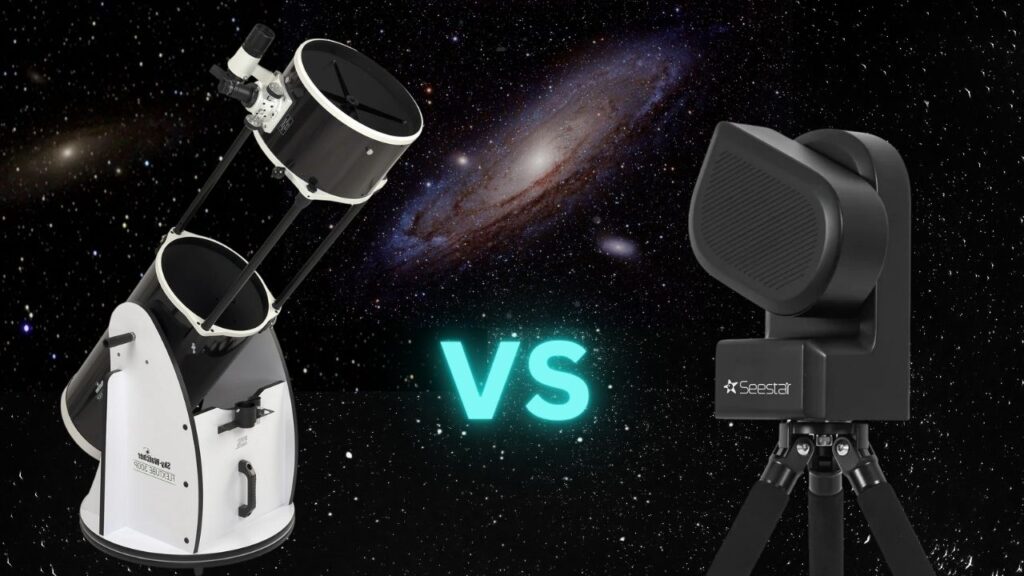
When you buy your first telescope, nobody warns you about something important:
what you will see looks nothing like the photos from Hubble or the James Webb.
Those spectacular images of colorful nebulae and galaxies with incredible detail are not what your eye sees through the eyepiece. And that disappoints a lot of people.
But there is good news: there is a way to get images that impressive from your garden or rooftop. The key is understanding the difference between two types of telescopes that work in completely different ways: the traditional visual telescope and the smart telescope.
In this article I explain how each one works, what you can expect to see with each type, and which one suits you best based on what you are looking for.
Why doesn’t what I see through my telescope look like NASA photos?
The photographs published by NASA, Hubble or the James Webb are the result of hours or days of accumulated exposure, advanced digital processing and equipment that costs millions of dollars. Your eye, on the other hand, captures only the light of the exact instant you look through the eyepiece.
This does not mean the experience is bad. It means it is different. Seeing Saturn with its rings in real time through an eyepiece is one of the most impactful experiences that exists. But if you expect to see the colors of the Orion Nebula like in the photos, you are going to need different equipment.
The visual telescope: analog astronomy
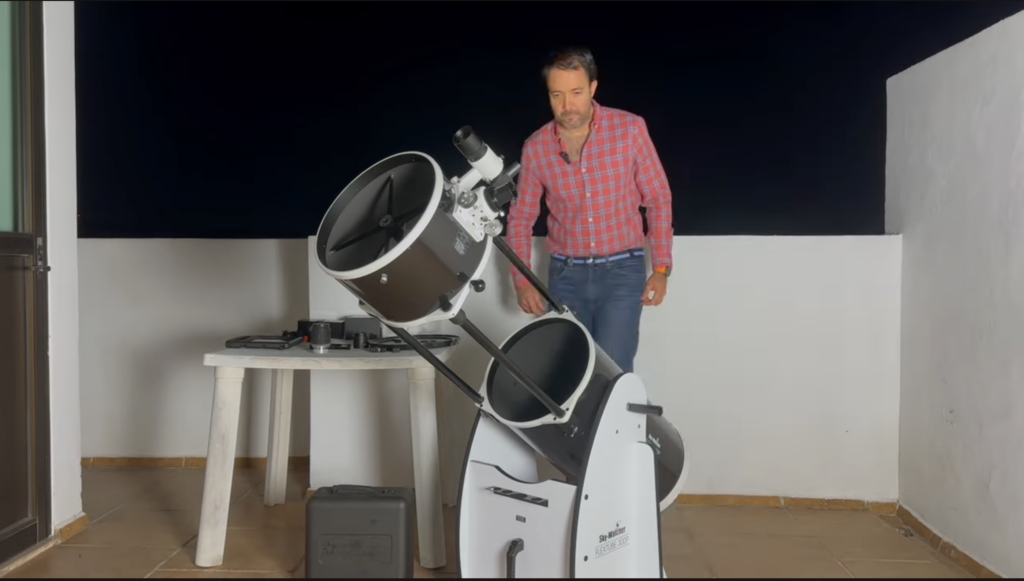
The visual telescope is the most traditional. You use your eyes directly, without electronic intermediaries. A high-performance example in this category is the Sky-Watcher FlexTube 300P, a 12-inch reflector (300mm aperture) with a Dobsonian mount.
Setting it up is almost a ritual. Its main components are the 17-kilogram Dobsonian base, the 21-kilogram optical tube, the eyepieces, the 9×50 optical finder and the laser collimator for aligning the mirrors. With practice, setup takes about 15 to 20 minutes. Without practice, about 40.
Something you should know about reflector telescopes is that they require periodic collimation. The mirrors fall out of alignment from transport vibrations and need to be realigned before observing. It is not difficult with a laser collimator, but it is an extra step you should consider.
What can you see with a 12-inch visual telescope?
The short answer is: a lot. Jupiter with its four Galilean moons (Io, Europa, Ganymede and Callisto). The Orion Nebula as a glowing little cloud. The Double Cluster in Perseus. The Andromeda Galaxy as a faint patch of light. Planets look spectacular because the large aperture captures a lot of light in real time.
What you will not see are colors in the nebulae or details in the galaxies. That requires long-exposure photography.
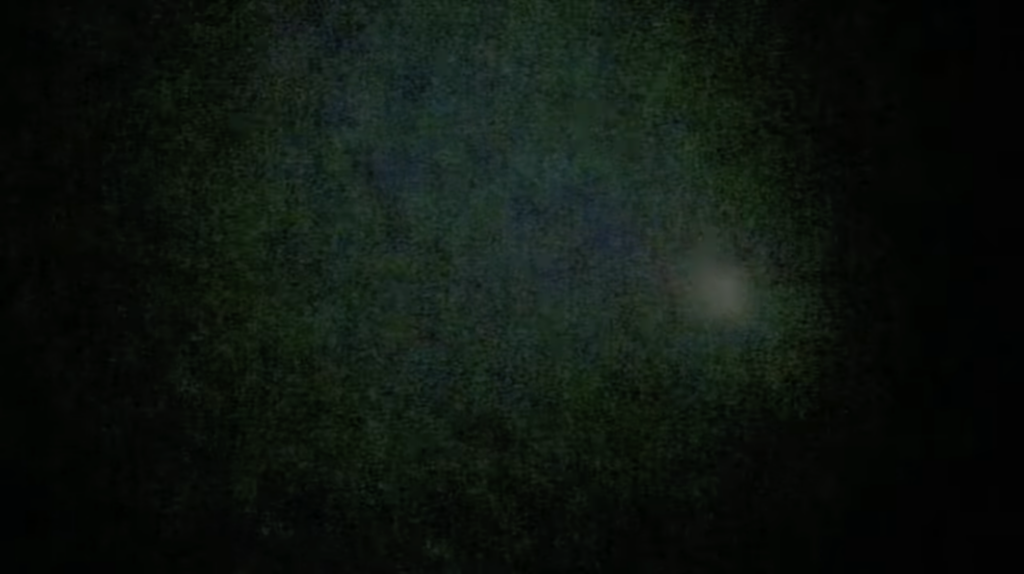
Andromeda Galaxy through Visual Telescope (Fuzzy white light blub)
Advantages of the visual telescope
- No batteries or internet connection required.
- The experience of looking directly at the sky is unique and irreplaceable.
- Planets are seen with much more detail than with a smart telescope.
- Does not depend on technology that can fail.
Disadvantages of the visual telescope
- Setup is more complex and takes time.
- Requires periodic collimation.
- You need to know how to navigate the sky to find objects.
- More bulky and heavy to transport.
The smart telescope: digital astronomy
The smart telescope revolutionized astronomy for beginners a few years ago. The most representative example is the ZWO SeeStar S50, a compact device that combines telescope, camera, motorized mount and image processing in a single unit controlled from your phone or tablet.
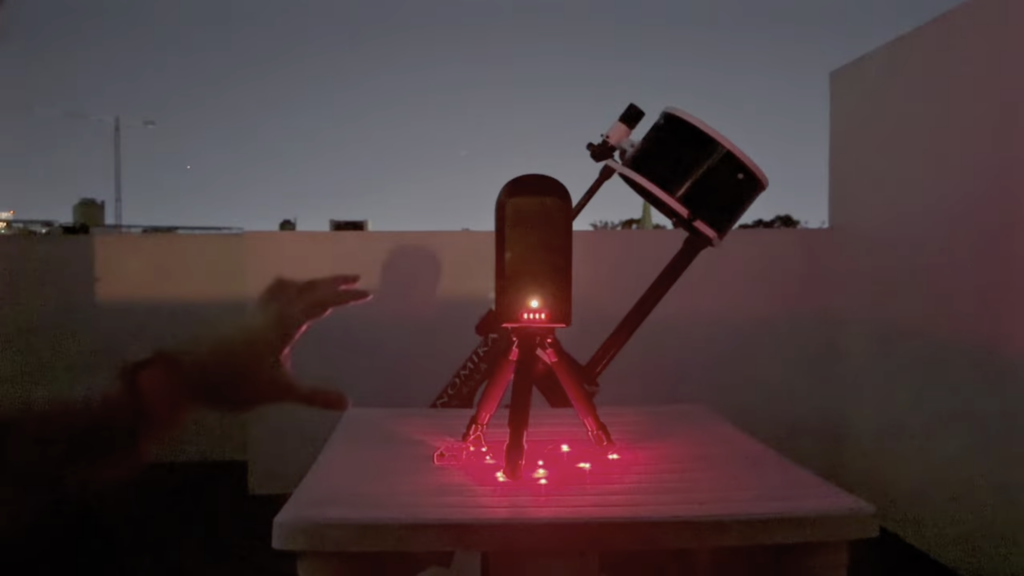
Setting it up takes literally two minutes: you connect the carbon fiber tripod to the telescope, turn it on with two clicks and open the SeeStar app on your device. The telescope connects via WiFi, automatically orients itself in the sky by identifying stars, and starts capturing images.
If you want to see Saturn, you tell the app to find Saturn, tap “Go Gazing” and within seconds the telescope points to the target on its own. You can program it to capture images for half an hour while you do something else, then come back to see what it photographed.
What can you see with a smart telescope?
The main advantage is with deep space objects. The Andromeda Galaxy, which in a visual telescope looks like a blurry patch, with the SeeStar S50 accumulating exposure for 10 minutes starts showing its structure and different tones in the nucleus. The Orion Nebula is seen with real colors and details that no eye can capture directly.
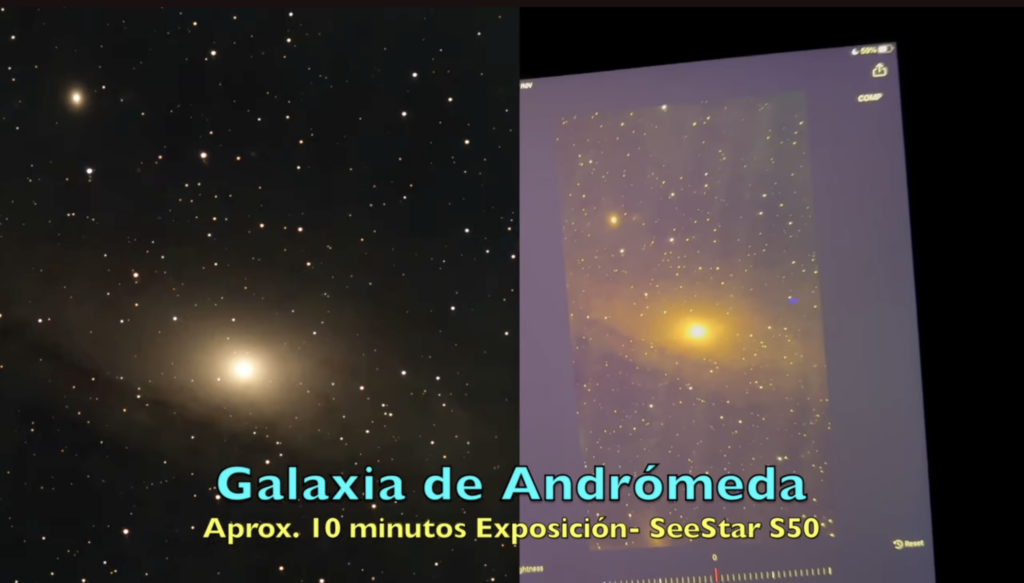
For planets, however, the visual telescope wins. The smaller aperture of the S50 (50mm) cannot compete with the 12 inches of the FlexTube for seeing planetary details.
Advantages of the smart telescope
- Ultra-fast setup, less than two minutes.
- No need to know how to navigate the sky.
- Produces images with real colors of nebulae and galaxies.
- Perfect for sharing on social media.
- The S50 costs around $450 USD.
Disadvantages of the smart telescope
- Requires battery, approximately 4 to 6 hours of life.
- The app sometimes crashes and needs to be restarted.
- Does not have the charm of looking directly through the eyepiece.
- For planets, performance is inferior to a visual telescope with good aperture.
Quick comparison: which one suits you?
Choose a visual telescope if:
- You enjoy analog experiences and the ritual of setting up equipment.
- You want to see planets with maximum detail.
- You prefer a direct connection with the sky without technological intermediaries.
Choose a smart telescope if:
- What excites you most is capturing images of nebulae and galaxies to share.
- You do not want technical setup complications.
- You enjoy technology as part of the experience.
And if you have the budget, the honest answer is: both complement each other perfectly. One for planets and the direct visual experience, the other for deep space photography.
Frequently Asked Questions
Why does what I see through my telescope look nothing like NASA photos?
Because those photos are the result of hours of accumulated exposure and advanced digital processing. Your eye captures only the light of the exact instant you look. To get similar images you need a smart telescope or astrophotography equipment that accumulates exposure for minutes or hours.
How much does a smart telescope like the SeeStar S50 cost?
Around $450 USD in the United States. In Mexico and other Latin American countries the price may vary. It is the most accessible option on the market in its category and the most recommended for beginners who want astrophotography without complications.
Can I see planets with a smart telescope?
Yes, but with limitations. The small aperture of the SeeStar S50 (50mm) cannot compete with a 6 or 8-inch visual telescope for seeing planetary details. For planets, the traditional visual telescope always wins.
Is a smart telescope difficult to use?
No, it is the simplest thing that exists in astronomy. If you know how to use an app on your phone, you can use a smart telescope. The equipment does all the orientation and capture work automatically.
What is collimation and why does it matter?
Collimation is the process of aligning the mirrors of a reflector telescope. With use and transport the mirrors fall slightly out of alignment, which affects the quality of what you see. It is done with a laser collimator and with practice takes only a few minutes. It is necessary maintenance for visual reflector telescopes.
Which one is better for absolute beginners?
If you have never used a telescope and do not want complications, the smart telescope is the friendliest entry point. If the classic visual astronomy experience appeals to you and you are willing to learn, a 6 or 8-inch reflector with a Dobsonian mount is the best long-term investment.