
Which telescope should I buy? This is probably the most common question among those starting out in astronomy. There are dozens of models, brands, and technical specifications that nobody explains clearly. In this article you will understand exactly how the three main types of telescopes differ, what their advantages and disadvantages are, and which one suits you best based on what you want to see and your budget.
Before looking at the types, there are two concepts you need to understand:
Aperture:
the diameter through which light enters the telescope. The larger, the better, because it captures more light and lets you see fainter objects in space.
Focal length:
the distance light travels inside the telescope. The longer it is, the more zoom and magnification you get. Telescopes for viewing planets have very long focal lengths. Those for deep space have very large apertures.
With that clear, let’s look at the three types.
1. Refractor Telescope: the classic one
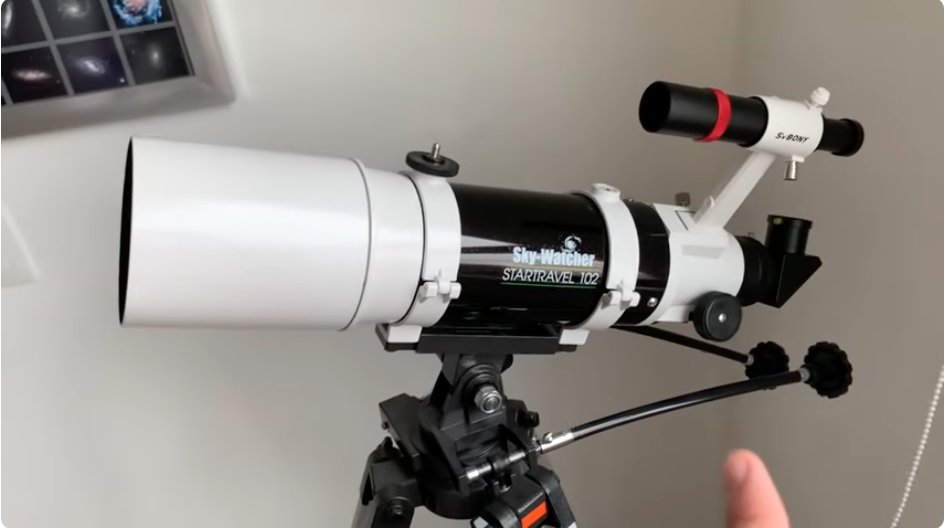
This is the telescope everyone imagines when they hear the word “telescope.” The same design pirates used centuries ago. It uses lenses to focus light, which enters through the front and exits through the eyepiece at the back.
A representative example is the Sky-Watcher 102 Z3, with a 4-inch aperture and 600mm focal length.
Advantages: it is a robust and proven design. It does not lose collimation, meaning it does not fall out of alignment from transport bumps. Setup is quick and simple. Ideal for viewing planets.
Disadvantages: they are heavy because they use glass. Large apertures are very expensive and difficult to manufacture. You will rarely find refractors larger than 6 inches, and if you do, they will be extremely expensive. They have chromatic aberration, an effect that makes the edges of objects appear with a purple halo.
Who is it for? For those who want something simple to use, mainly for viewing the Moon and planets, without maintenance complications.
2. Reflector Telescope: the best value for money
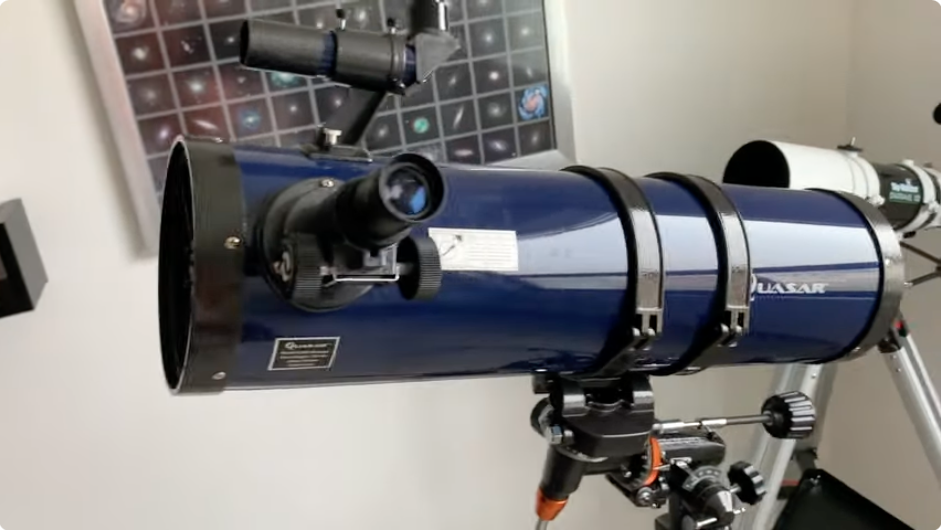
Instead of lenses, it uses mirrors. Light enters through the open front, bounces off a primary mirror at the back, then off a secondary mirror, and exits through the eyepiece at the front of the tube. That is a quick way to identify them: the eyepiece is at the front, not the back.
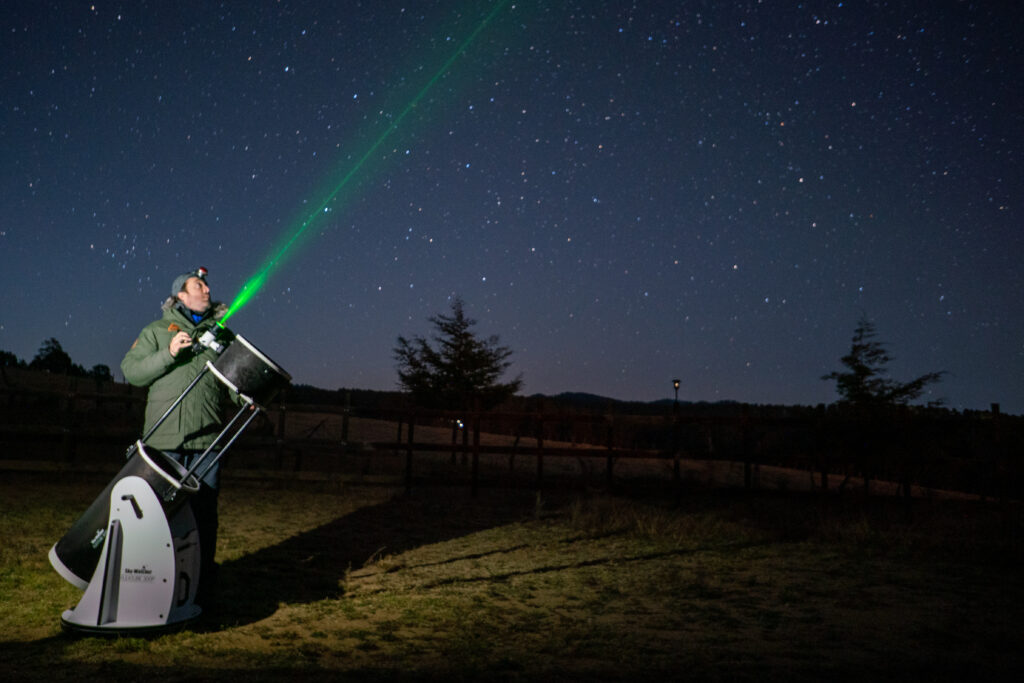
They work best from 6 inches of aperture and come in sizes up to 30 inches. A model I know well firsthand is the Sky-Watcher FlexTube 300P, a 12-inch reflector that has given me incredible observation experiences.
Advantages: they are the most affordable per inch of aperture. If you want the most light for your money, a reflector is the answer. They are lighter than refractors of equivalent aperture. They have no chromatic aberration.
Disadvantages: they require periodic collimation. The mirrors fall out of alignment from transport vibrations and need to be realigned. It is not difficult with the right tools, but it is an extra step. They are more bulky.
Who is it for? For those who want to see deep space objects like nebulae and galaxies, with the best possible performance for their money. It is my recommendation for most beginners.
3. Compound Telescope or Schmidt-Cassegrain (SCT): the most versatile
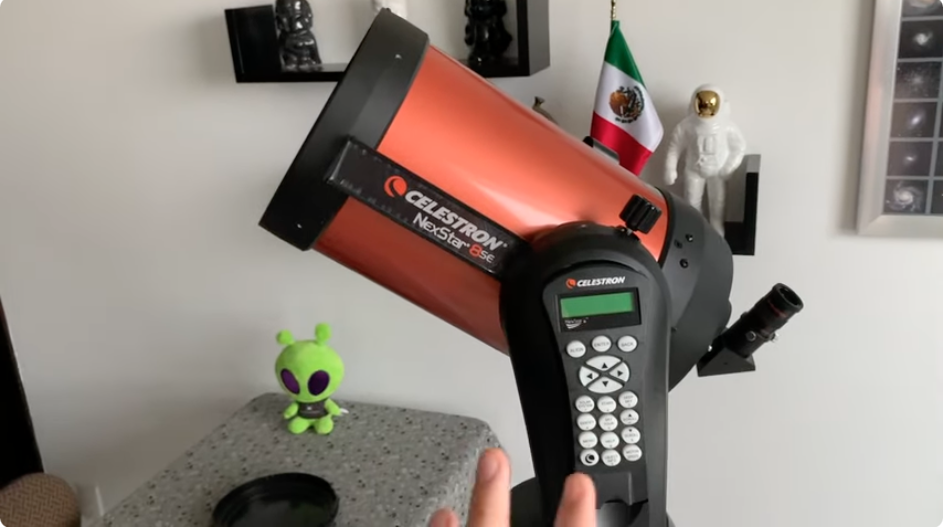
It combines lenses and mirrors. Light bounces multiple times inside the tube, allowing it to have an enormous focal length in a compact tube. The Celestron NexStar 8SE is the most representative example of this type.
A fun fact: a tube of just 43 cm can have a focal length of 2 meters. It is like having a 2-meter-long telescope in a portable format.
Advantages: they are good for everything. They work for both planets and deep space. They have a lot of zoom thanks to their long focal length. They are compact for the aperture they offer. Many models include motorized mounts that find and track objects automatically.
Disadvantages: they are the most expensive of the three. A Celestron NexStar 8SE costs around $1,600 USD in the United States. They can also lose collimation, though less than pure reflectors.
Who is it for? For those looking for a versatile high-performance telescope and have the budget to invest in the best equipment from the start.
Conclusion: Which one to buy?
If you are just starting out and want the best experience for your money, a 6 or 8-inch reflector telescope is the recommendation. You will see more, spend less, and have equipment that will not quickly become limiting.
If you want something very easy to use and mainly want to see the Moon and planets, a refractor is a solid and hassle-free option.
If you have the budget and want one telescope that does everything well, a Schmidt-Cassegrain is the right investment.
Have questions about which specific model to buy?
Check our detailed reviews in the Evaluations section, where we analyze specific models with pros, cons, and current prices.
Frequently Asked Questions
How much should I spend on my first telescope?
For a first telescope that is truly worth it, the recommended range is between $150 and $400 USD. Below that price, toy-grade telescopes tend to disappoint and can ruin the experience from the start. You do not need to spend a fortune, but enough to see something that excites you.
Can I see galaxies and nebulae with a beginner telescope?
Yes, but with realistic expectations. You will not see the colorful NASA photos. You will see faint patches of grayish light that, when you understand what you are looking at, are equally impressive. A 6-inch reflector will show you the Andromeda galaxy, the Orion nebula, and star clusters without problem.
What is better to start with, planets or deep space?
The Moon and planets are the best entry point. They are bright, easy to find, and give immediate results. Saturn with its rings through a modest telescope is an experience you will not forget. Deep space requires darker skies and a bit more patience.
Do I need a motorized mount?
It is not necessary to start. Manual mounts work perfectly well and teach you to know the sky in a more natural way. A motorized mount is a convenience, not a necessity, and considerably raises the cost of the equipment.
Does light pollution from the city matter much?
For viewing the Moon and planets, light pollution is not a major problem. For deep space objects like nebulae and galaxies, it does affect significantly. The ideal is to get out of the city occasionally, even just an hour’s drive, to enjoy darker skies.
What accessories do I need besides the telescope?
What comes in the box is enough to start. In the medium term, an additional higher quality eyepiece makes a noticeable difference in what you see. Also a star map app on your phone, like Stellarium, which is free and helps you identify what you are looking at.