
The Olympic drama of Demeter, the celestial engineering of the Maya, and the corner of the sky that turns perfectly sane amateur astronomers into lunatics who spend three hours hunting the same galaxy at 4 in the morning.
By Juan Pablo Martín | ASTRONOMIKA TV | May 2026
There is a blue star out there that the Greeks turned into a symbol of grief, the Maya into a cosmic clock, and modern astronomers into the arrow pointing toward the gravitational center of everything that exists. Its name is Spica, and the constellation around it hides one of the most brutal pieces of gossip from Mount Olympus, a discovery that took centuries to understand, and the most chaotic galactic neighborhood you can find with a telescope. Welcome to Virgo.
✦ ✦ ✦
The kidnapping that invented the seasons
The Greeks had an explanation for everything, and for the seasons they invented one of the most twisted family dramas on Mount Olympus. The cast: a mother with the power to kill every crop on Earth, a daughter who that day went out to pick flowers with no idea her life was about to split in two, and an underworld god with very little respect for the concept of consent.
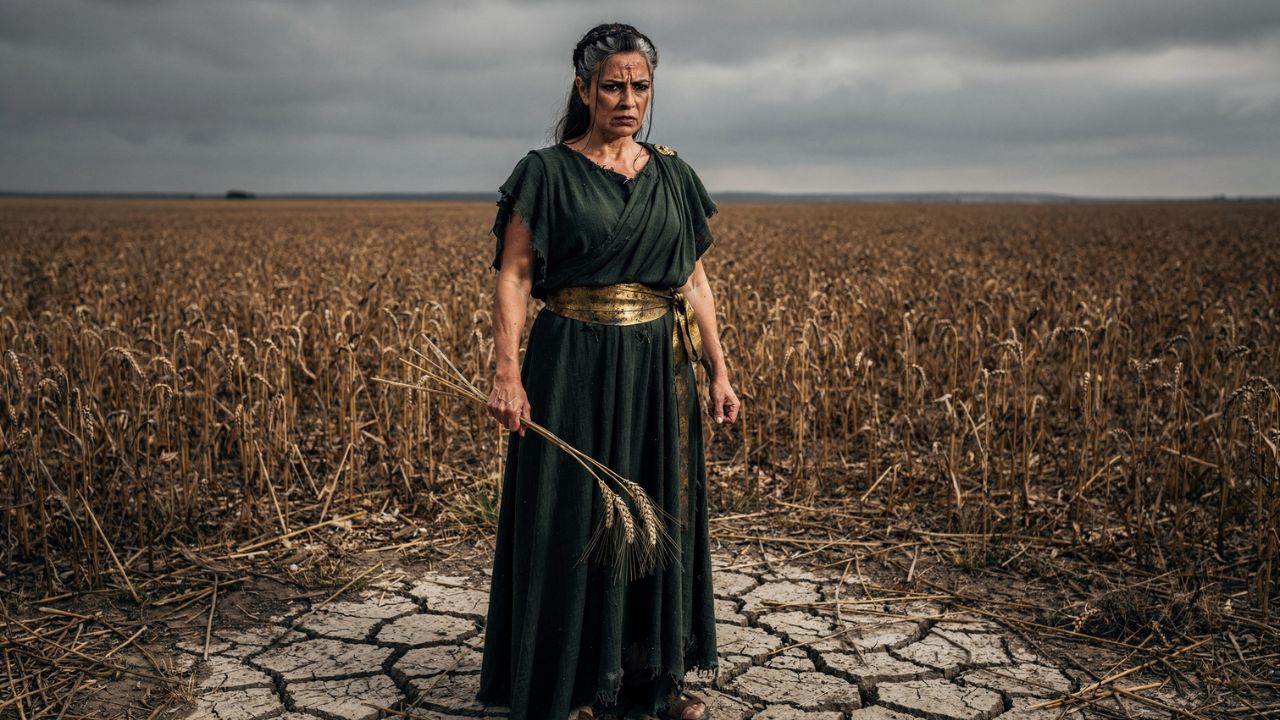
Demeter was the goddess of agriculture, the one who made sure wheat grew, trees bore fruit, and humanity did not starve. She was not a decorative goddess. She was literally the life support system of the ancient world.
Her daughter, Persephone, was the opposite: young, radiant, without a single enemy on Olympus. The kind of character who in any Greek story lasts exactly until someone powerful notices her.
That someone was Hades.
The most widespread version says Hades saw her picking flowers in a meadow in Sicily and decided he wanted to marry her. The method he chose was, let’s say, unconventional: he split the earth open, pulled her into the underworld, and closed the ground above her head.
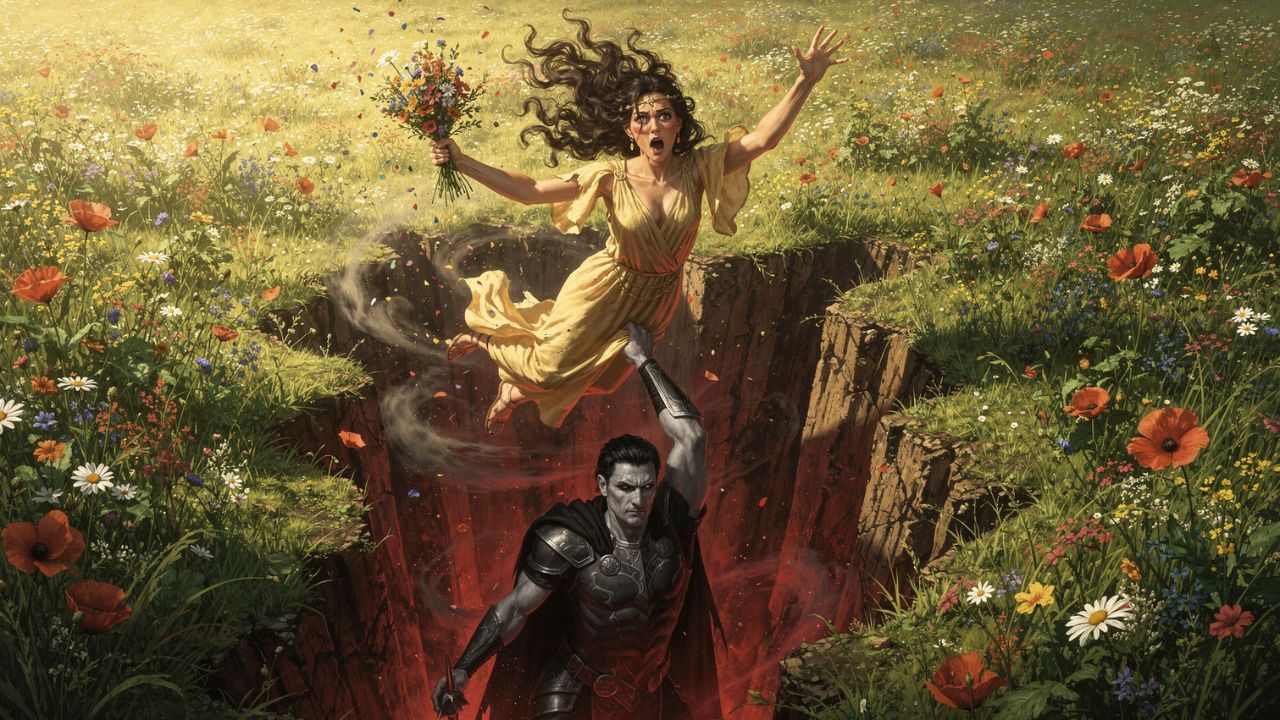
Persephone vanished without a trace. Demeter searched for her for nine days and nine nights without eating, without sleeping, without doing anything she was supposed to do as goddess of agriculture. The crops began to die. Animals stopped reproducing. Humanity began to starve.
Zeus, the most powerful god on Olympus and Persephone’s own father, took an embarrassingly long time to intervene, and when he finally did, he resolved the kidnapping of his own daughter with a solution no family lawyer would approve of today.
By the time he acted, the negotiation with Hades already had a complication: Persephone had eaten six pomegranate seeds in the underworld. In Greek mythology, eating in the realm of the dead binds you to that place. There was no way to bring her back completely.
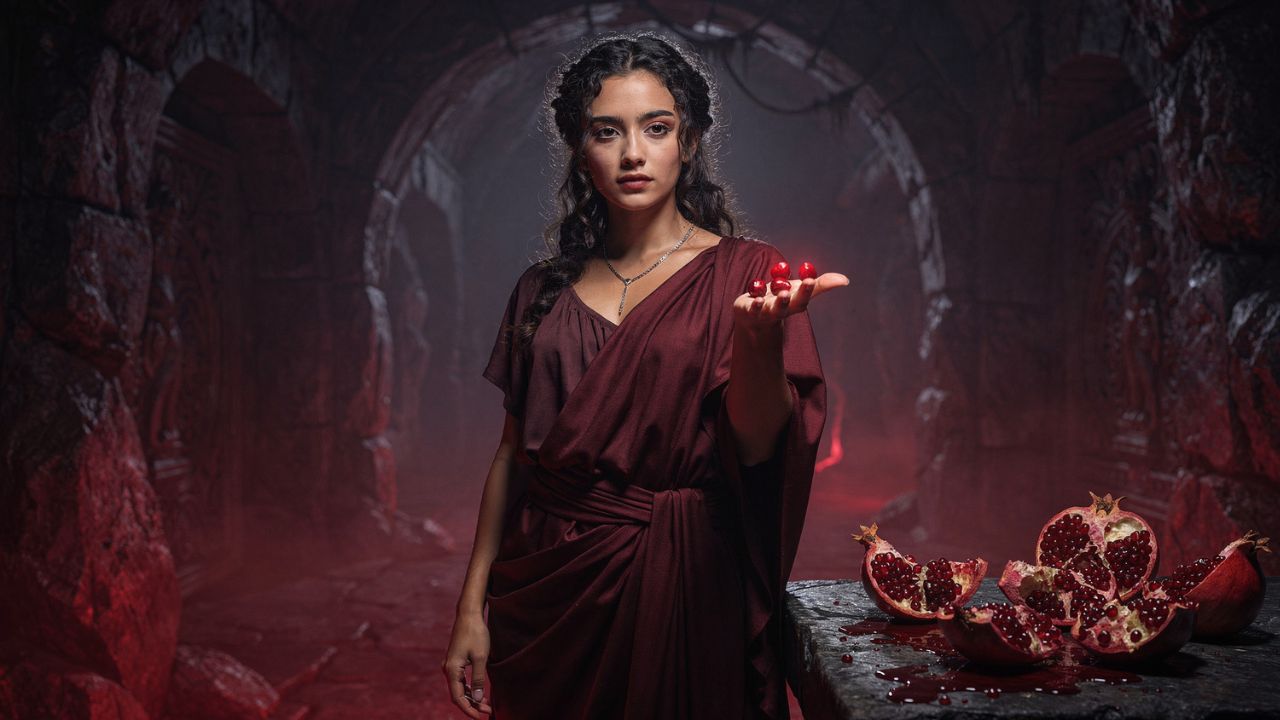
The final deal was a half-solution that satisfied no one: Persephone would spend six months in the underworld with Hades and six months on the surface with her mother. Every time Persephone returns, Demeter celebrates and the world blooms. Every time she leaves, Demeter returns to her grief and the world freezes. The Greeks had just invented the seasons.
The irony of the myth is that nobody comes out of this story looking good. Hades got his wife but never her love. Persephone was trapped between two worlds forever. Demeter got her daughter back, but only halfway. And Zeus, who could have prevented all of this from the start, washed his hands of it with a diplomatic agreement that essentially legalized the kidnapping.
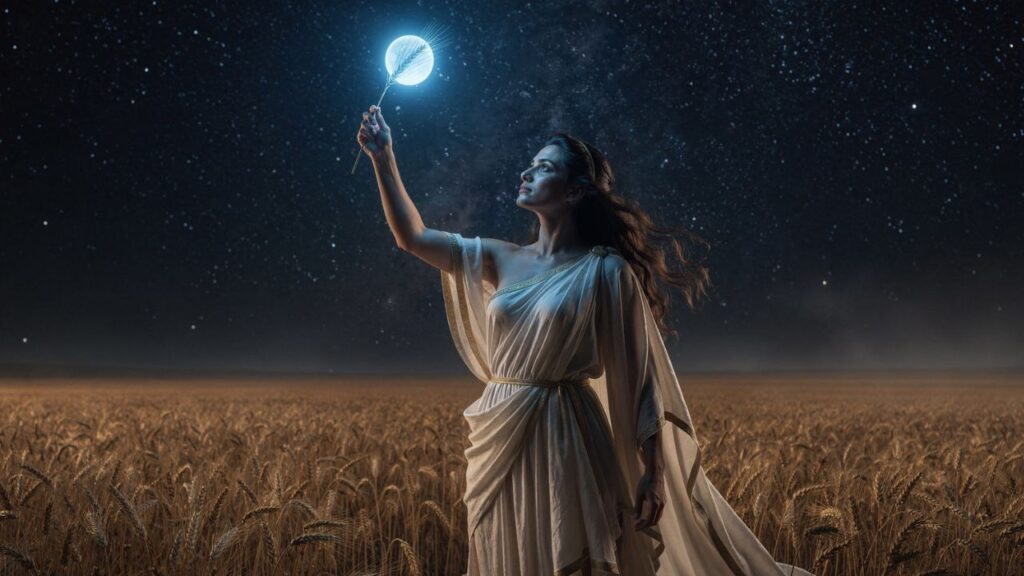
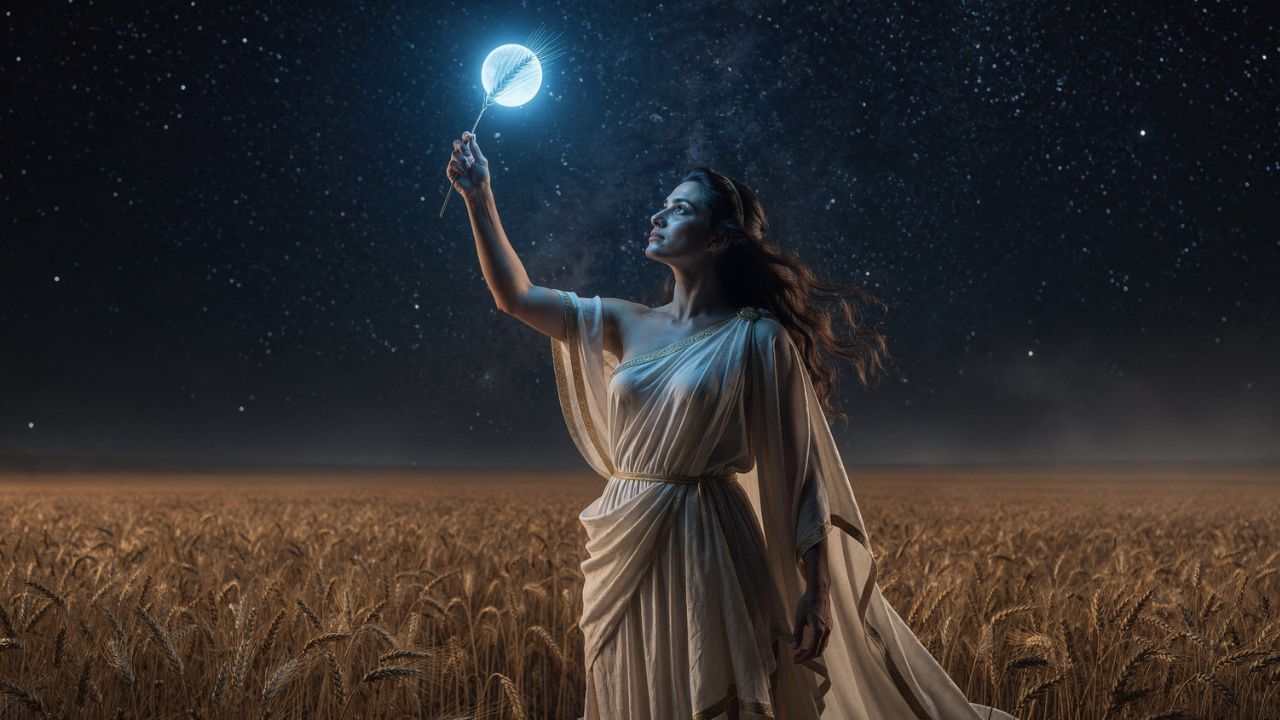
Virgo in the sky represents Demeter, or in some versions Persephone herself, holding a wheat stalk. That stalk is Spica, the brightest star in the constellation, shining blue 250 light-years away as a reminder that the universe sometimes has a twisted sense of humor.
Other Greek traditions associated Virgo with Astraea, goddess of justice, who abandoned Earth when humans became too violent and was placed in the sky as the last symbol of a more innocent age. But the drama of Demeter and Persephone is the one that survived with the most force, and it is easy to understand why. It has everything a good story needs: love, betrayal, power, loss, and an ending that never quite resolves anything.
✦ ✦ ✦
The same sky, different stories
The Greeks were not the only ones who looked at this region of the sky and felt that something important was there. Thousands of miles apart, with no contact between them, two civilizations saw the same blue star and built completely different stories. Neither one resembles Demeter’s. That is precisely what makes it interesting.
The Maya: Ixchel and the most precise clock of the ancient world
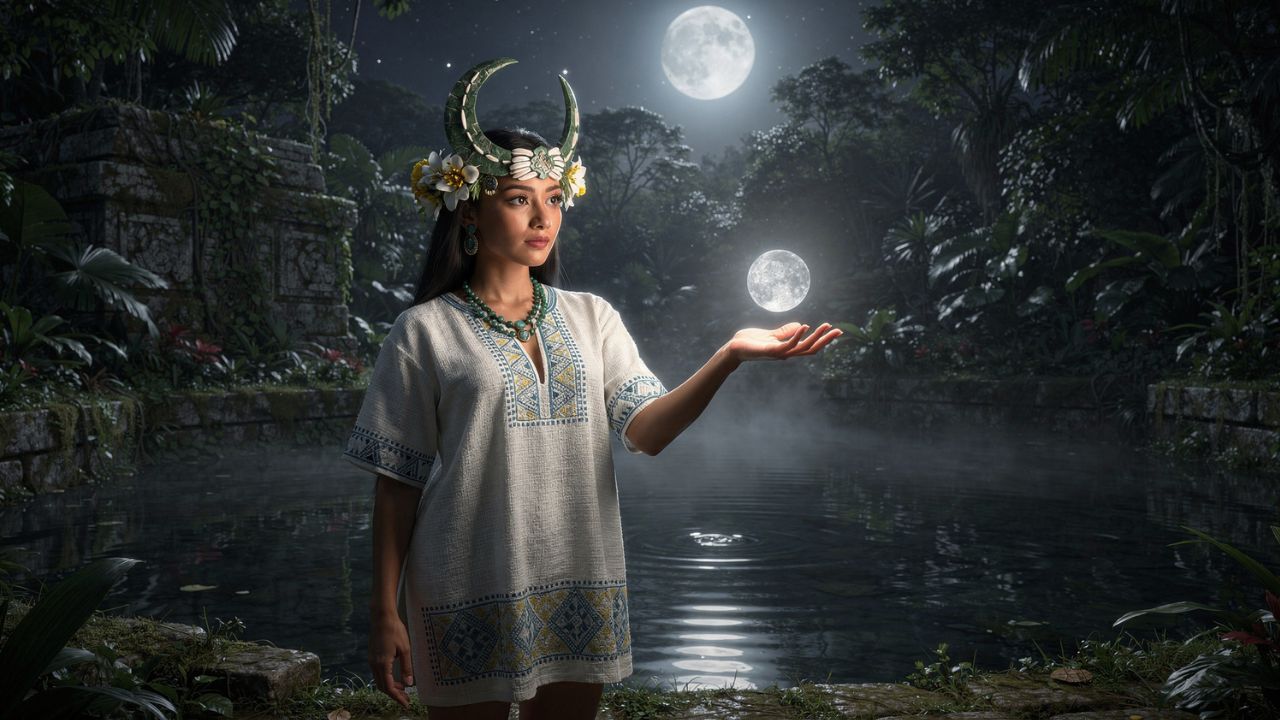
Ixchel was not a simple goddess. In the Maya worldview she was the lady of the Moon, medicine, childbirth, and weaving, all at once. Imagine a single divine figure being responsible for the lunar cycles, for babies being born healthy, and for fabrics having the right colors. The Maya did not have gods specialized in one thing. Their deities carried entire worlds.
And Ixchel had two faces. The young version was a beautiful woman associated with water and fertility. The old version was something else entirely.
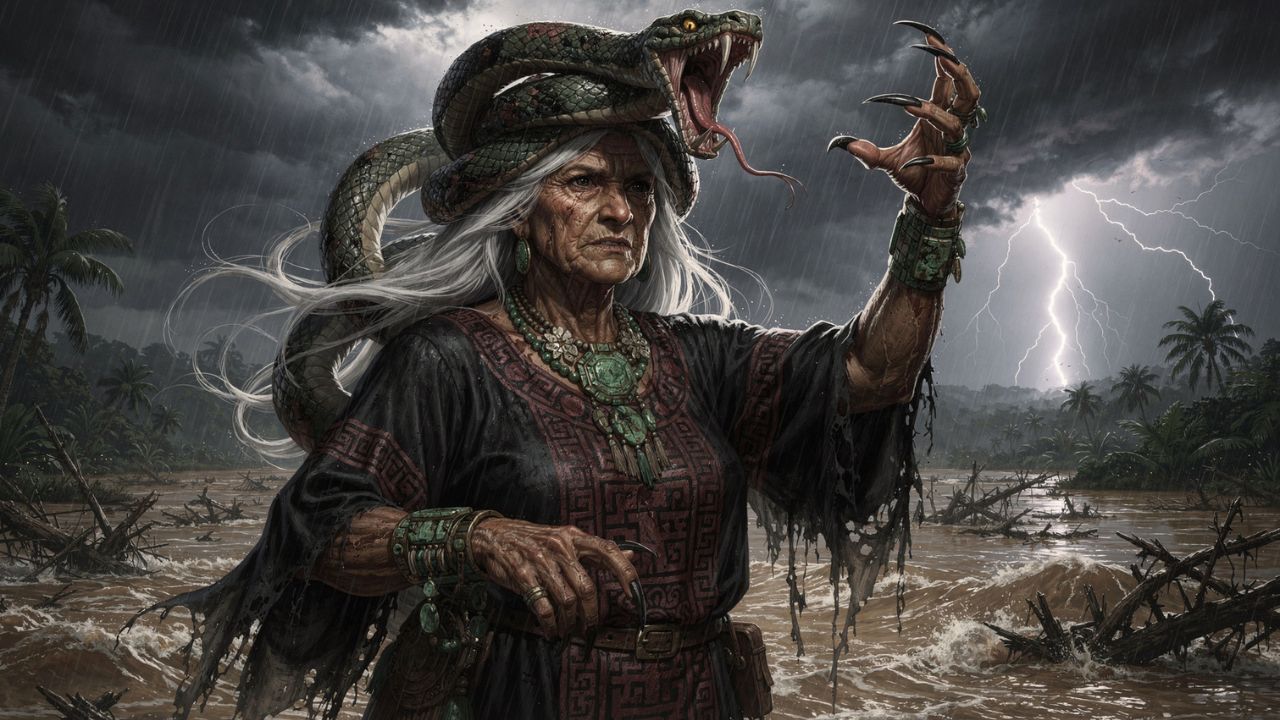
The old Ixchel had claws, fangs, and a live serpent crowning her head, capable of unleashing floods and destroying crops as easily as she made them grow. She was not a kind goddess. She was a real one, with the power to give and to take away.
The connection with Spica and the region of Virgo comes through something more subtle than a kidnapping myth. The Maya astronomer-priests, the ones who spent entire nights on observatory platforms recording the sky in their codices, used the heliacal rising of certain stars to calibrate their agricultural calendar with a precision that still impresses modern astronomers.
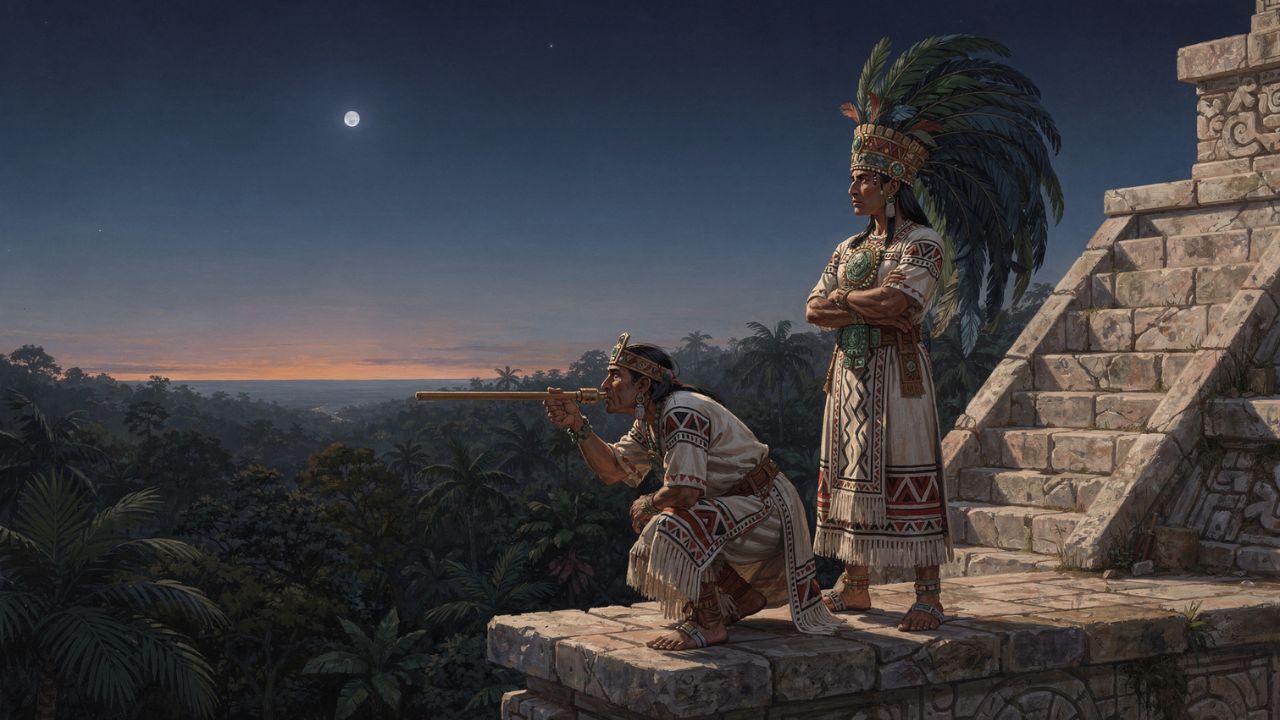
The heliacal rising is the moment of the year when a star becomes visible on the horizon just before dawn, after spending weeks hidden by the Sun’s glare. For the Maya, that moment was not an abstract astronomical data point. It was a divine signal. When an important star reappeared on the horizon at dawn, it was time to prepare the land, to plant, to move armies, or to hold rituals. The sky was the calendar, and the priests were the only ones who knew how to read it.
While Demeter was weeping for her lost daughter to explain why winter came, the Maya were measuring the sky to the millimeter to know exactly when to plant corn. Same sky, completely different logic. One civilization sought comfort in drama. The other sought operating instructions.
Vedic India: Chitra, the jewel of the divine craftsman
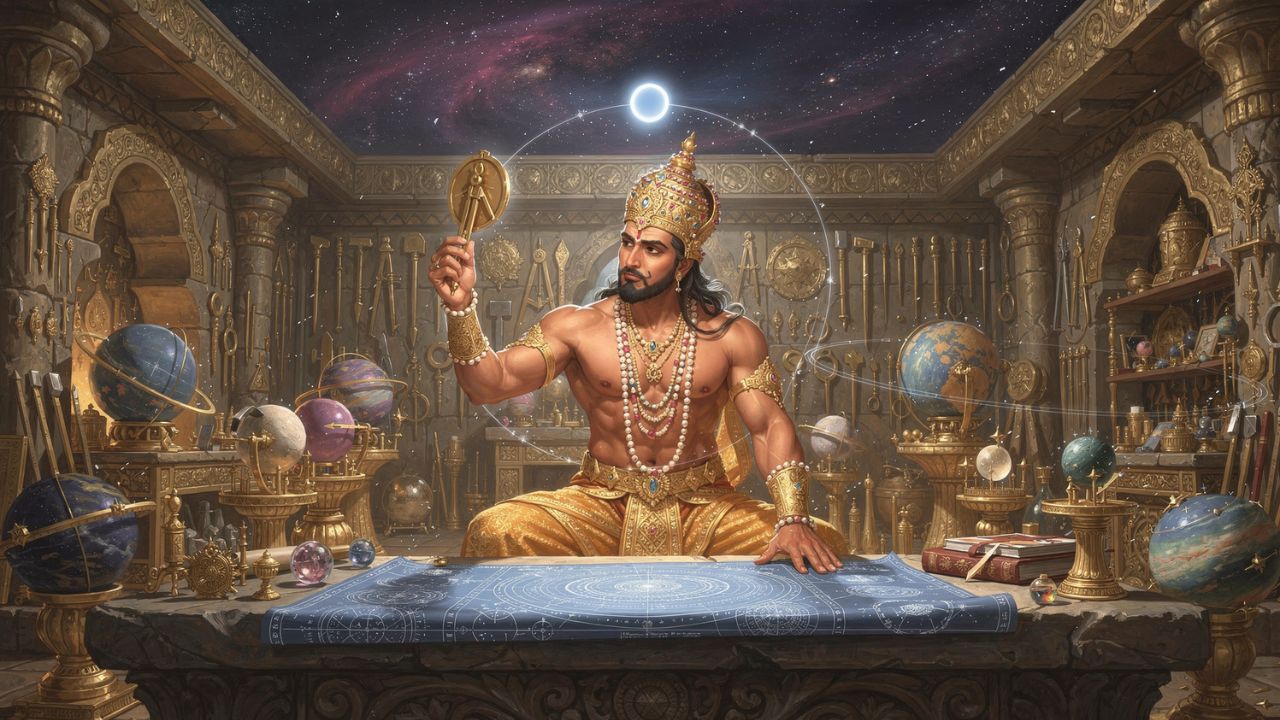
In the Vedic astrological system, the sky is divided into 27 lunar mansions called nakshatras, each marked by a star or group of stars. Spica is Chitra, the fourteenth nakshatra. Its name in Sanskrit means “the brilliant” or “the jewel,” and it is one of the most revered in the system because it marks the exact balance point of the Vedic zodiac.
Chitra belongs to Vishvakarma, the divine architect, the craftsman of the gods. He is not a figure of war or family drama. He is the cosmic engineer who designed and built the celestial cities, forged the weapons of the gods, and gave material form to the universe. Think of him as the project director of the cosmos. And his star is Spica, that same blue light the Greeks turned into a wheat stalk held by a grieving goddess.
The contrast could not be cleaner. In Greece, Spica is a symbol of loss and cycles of sorrow. In India, the same star is the workshop of the most important craftsman in the universe, a place of creation, precision, and deliberate beauty. The same photon of light traveling 250 years to reach your eyes. Interpretations light-years apart from each other.
Vishvakarma is in fact the later form of an older Vedic deity called Tvashtr, the same cosmic craftsman under an earlier name in the oldest texts. Chitra carries that double genealogy of a single builder god, an energy of construction and meticulous detail that does not appear in any other tradition that looked at this same star. The Maya saw a clock. The Greeks saw a wound. Vedic India saw a workshop.
Three civilizations, three stories, one star. But Spica holds a scientific secret none of them could fully imagine.
✦ ✦ ✦
The star that revealed the Earth wobbles, and the arrow pointing to the center of everything
Spica, whose Latin name simply means wheat stalk, holds a secret none of those priests or poets could have imagined: it is not Spica that moves. It is the Earth.
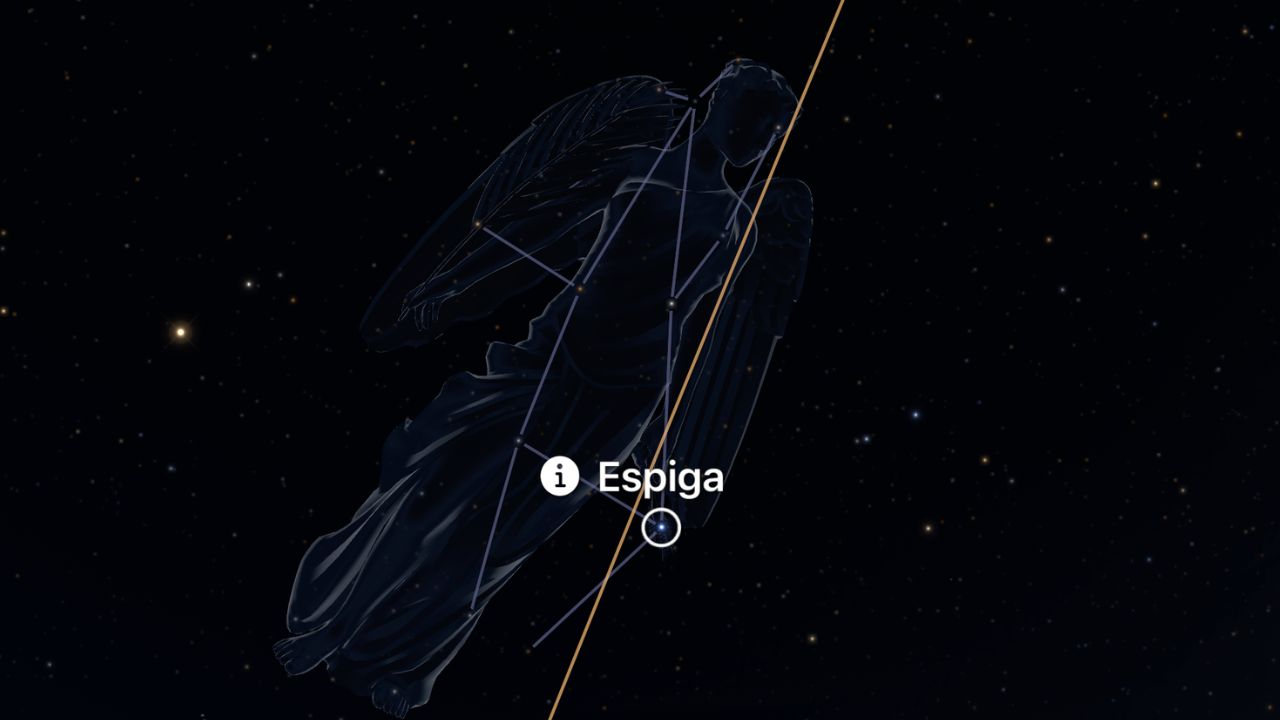
Spica looks like a quiet star. It has been there, shining blue in the same position, for as long as humans can remember. But around 127 BC, a Greek astronomer named Hipparchus of Nicaea did something that changed astronomy forever: he compared his own measurements of Spica’s position with those recorded by Timocharis, an astronomer who had died centuries before him. The numbers did not match.
Spica had apparently “moved” almost two degrees relative to the equinoxes since Timocharis’s measurements. Hipparchus could have dismissed the difference as a measurement error. Instead, he reached an extraordinary conclusion: it was not Spica that had moved. It was the Earth. Our planet’s axis does not always point to the same place in the sky. It rotates slowly, like a spinning top losing speed and beginning to wobble, tracing a complete circle every 26,000 years, the same slow drift that today keeps Polaris as our pole star and that in 13,000 years will hand that job to Vega. Hipparchus deduced all of this by comparing two measurements of Spica separated by centuries, without a telescope, without a computer, and without knowing exactly what he was measuring.
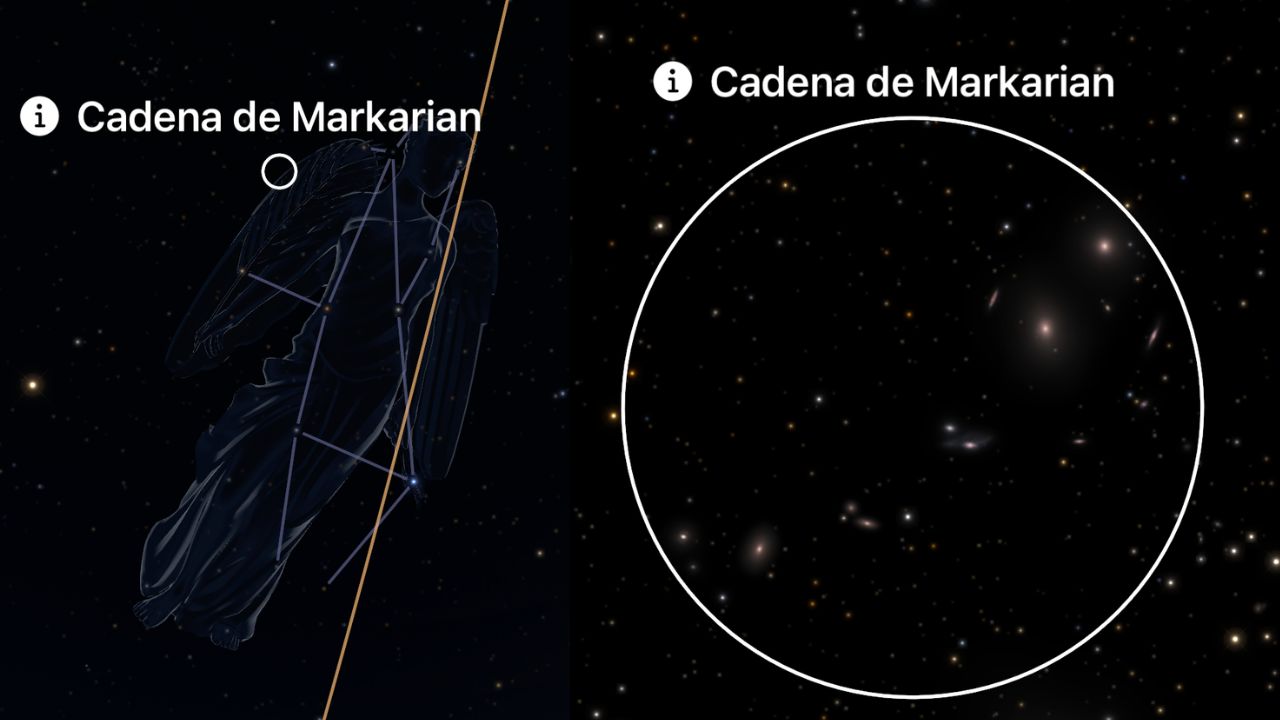
But Spica does not only help us understand that the Earth wobbles. It also works as an arrow. Follow it in the right direction and it points toward the Virgo Cluster, a swarm of between 1,300 and 2,000 galaxies concentrated in a region of the sky that looks completely empty to the naked eye.
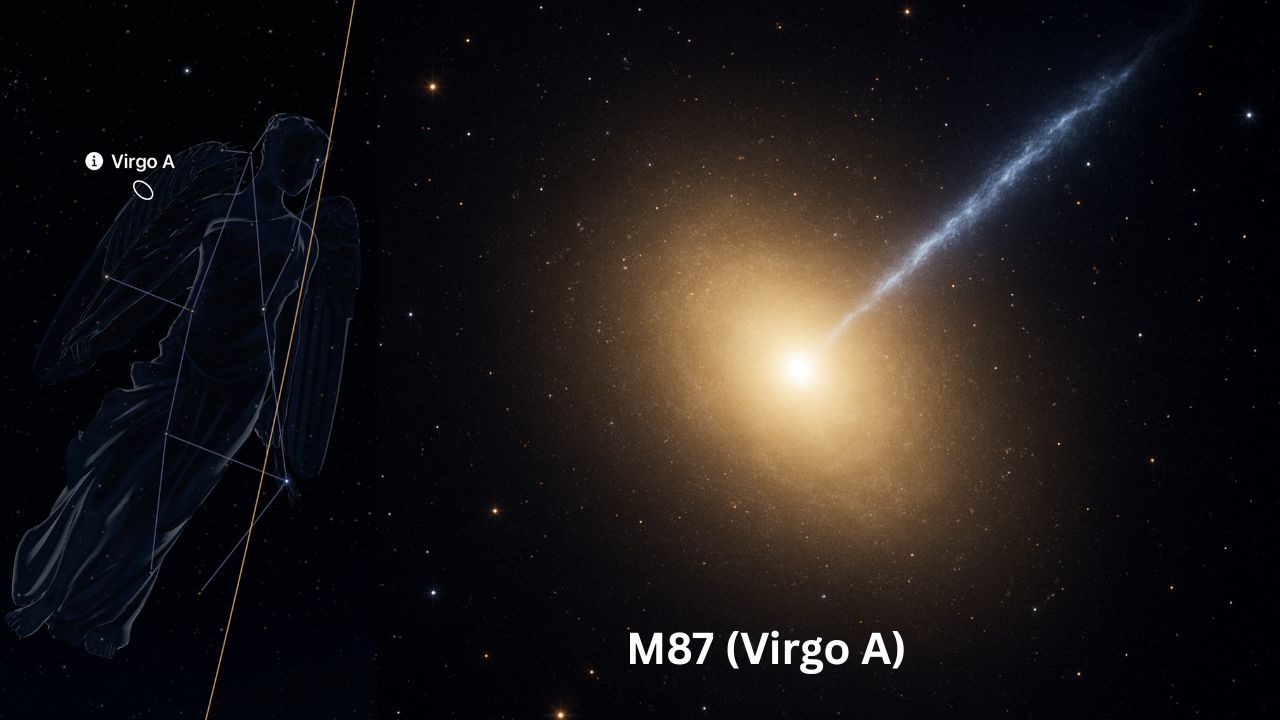
At the center of that cluster is M87, also known as Virgo A. M87 has two names because two different worlds found it: Messier numbered it to avoid confusing it with a comet, and the radio catalog named it Virgo A when it turned out to be one of the most powerful broadcasters in the sky. Two names, two stories, the same brutal object.
At the center of M87 (Virgo A) is the supermassive black hole that the Event Horizon Telescope photographed for the first time in history in 2019. Six and a half billion times the mass of the Sun, captured in an image that took decades of international work to produce, and in which Latin America participated with three installations: the Large Millimeter Telescope (LMT) on the Sierra Negra in Puebla, Mexico; the APEX observatory in the Atacama Desert, Chile; and ALMA, also located in Atacama, an international collaboration operating from Chilean soil that was a key piece of the global EHT network. Three Latin American installations pointing together at the same black hole. That does not appear in textbooks yet, but it should.
The Virgo Cluster is not just an impressive galactic neighborhood. It is the gravitational anchor of the Local Supercluster, the structure the Milky Way belongs to. Our entire group of galaxies moves toward that region of the sky. Here comes the important nuance: the Virgo Cluster is not the Great Attractor, that mysterious gravitational anomaly much farther away, about 250 million light-years off, toward which even the Virgo Cluster itself moves. But it is the nearest and most visible gravitational pull in that chain. Think of it as the first stop on a train that goes much farther than you can see. Nobody in the universe is standing still. Not you, not the Milky Way, not Spica. Everything falls toward something.
The Milky Way moves toward the Virgo Cluster at about 300 km/s. The Virgo Cluster, in turn, moves toward the Great Attractor at about 600 km/s. While you read this, the solar system has already covered several thousand kilometers. The concept of “standing still” is a very convenient local illusion.
The CELESTRON SkyMaster 15×70 (Mexico | United States | Spain) let you start making out the brightest blobs in the cluster from a sky with little light pollution. With the SKY-WATCHER FlexTube 300P (Mexico | United States | Spain) and a dark rural sky, the galaxies of Virgo and Markarian’s Chain start separating into individual fuzzy patches, each in its place. For smaller, more detailed objects like the surroundings of M87 (Virgo A), the ZWO Seestar S50 (Mexico | United States | Spain) does the heavy lifting with a patience no human eye can match. In every case, sky darkness matters more than aperture.
This is where the Messier Marathon takes its toll. Every March, amateur astronomers around the world attempt to observe all 110 objects in the Messier catalog in a single night. Virgo holds 11 of those objects, all galaxies, all packed into the same patch of sky, and all looking suspiciously similar when you are viewing them through a modest telescope at 3 in the morning. Markarian’s Chain, which looks like an elegant structure in books during the day, becomes a maze of nearly identical gray blobs at night when you have been observing for six hours and the coffee has stopped working. In the Spanish-speaking astronomy community there is an unofficial consensus: Virgo is where marathon observers go to suffer.
In Virgo you do not lose galaxies. You lose astronomers.
Virgo is best seen between March and June from the northern hemisphere, with May as the ideal month. From the southern hemisphere, the best window is between February and April. A mediocre rural sky beats a top-tier urban setup when you are chasing galaxies this faint. To find it, the simplest method is to follow the arc of the Big Dipper’s handle to Arcturus in Boötes, then continue that same curve down to Spica.
If you want to explore the Libra constellation, Virgo’s direct neighbor in the zodiac, or the Leo constellation, which shares the same spring viewing window, we have their full stories on the site. And if the Messier Marathon caught your attention, the Cancer constellation and its cluster M44 are a good stop before reaching Virgo.
✦ ✦ ✦
What do you see?
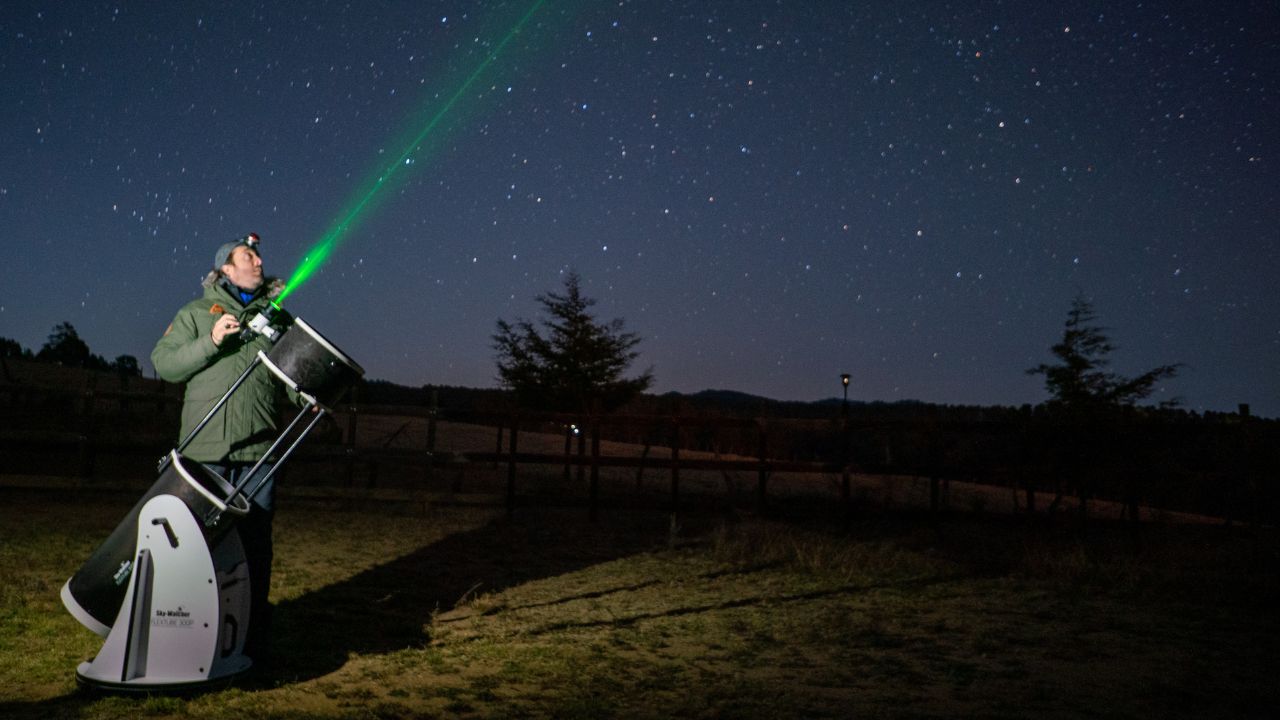
Virgo is exactly that: a constellation that looks simple from the city and turns out to be a trap of infinite depth the moment you start pulling the thread. A star whose Latin name means wheat stalk, which revealed to a Greek that the Earth wobbles. A cluster that gravitationally anchors everything we know. A black hole photographed for the first time in history with help from Latin American telescopes. And eleven galaxies that have made more than one amateur astronomer cry at 4 in the morning.
If you want to keep exploring the night sky at this level of detail, find us on ASTRONOMIKA TV on YouTube, Instagram, and TikTok for more stories like this one, told with the same rigor and the same attitude. And if Demeter’s grief left you wanting a soundtrack, “The Galactic Harvest” by ASTRONOMIKA BEATS scored this exact cosmic harvest.
✦ ✦ ✦
Frequently asked questions about the Virgo constellation
What does the Virgo constellation represent in Greek mythology?
Virgo represents mainly Demeter, goddess of agriculture, although some versions identify her with her daughter Persephone. The central myth is the kidnapping of Persephone by Hades, the grief of Demeter that killed the world’s crops, and the agreement that divided the year into seasons. The star Spica represents the wheat stalk Demeter holds, and its Latin name means exactly that: wheat stalk.
What does the name Spica mean?
Spica comes from Latin and means wheat stalk. It is the stalk that the figure of Virgo holds in classical representations of the constellation, a direct reference to Demeter as goddess of agriculture. The name has been describing exactly what it represents for more than two thousand years.
What is the brightest star in Virgo?
Spica, designated α Virginis, is the brightest star in the constellation and the fifteenth brightest in the entire night sky. It is a spectroscopic binary 250 light-years from Earth, with a temperature of around 22,000 K that gives it its characteristic blue-white color. Its Latin name means wheat stalk.
What role did Spica play in the history of astronomy?
Around 127 BC, the Greek astronomer Hipparchus of Nicaea compared his measurements of Spica’s position with those of the astronomer Timocharis, made centuries earlier. The difference between the two measurements allowed him to discover the precession of the equinoxes, the slow wobble of Earth’s axis that completes a cycle every 26,000 years. It was one of the most important discoveries in ancient astronomy.
What is the Virgo Cluster?
It is a collection of between 1,300 and 2,000 galaxies concentrated in a region of the sky in the direction of the Virgo constellation, about 55 million light-years from Earth. It is the core of the Local Supercluster, the larger structure the Milky Way belongs to. Its most famous galaxy is M87, also known as Virgo A, which harbors the supermassive black hole photographed for the first time in history in 2019, with participation from telescopes in Mexico and Chile.
What is the Great Attractor and does it have anything to do with Virgo?
The Great Attractor is a gravitational anomaly located about 250 million light-years away, toward which the Virgo Cluster, the Milky Way, and the entire Local Supercluster are moving. The Virgo Cluster is not the Great Attractor, but it is the nearest and most visible gravitational pull in that chain. Think of it as the first stop on a train that goes much farther than you can see.
When can the Virgo constellation be seen?
From the northern hemisphere, Virgo is visible between March and June, with May as the best month for observation. From the southern hemisphere, the best window is between February and April. To find it, the simplest method is to follow the arc of the Big Dipper’s handle to Arcturus in Boötes, then continue that same curve down to Spica.
What equipment can be used to observe the Virgo Cluster?
The CELESTRON SkyMaster 15×70 binoculars let you distinguish the brightest blobs in the cluster from a sky with little light pollution. With telescopes of 8 inches or more, like the SKY-WATCHER FlexTube 300P, and a dark rural sky, the galaxies of Virgo and Markarian’s Chain separate into individual objects. For fine detail like the surroundings of M87 (Virgo A), the ZWO Seestar S50 does the heavy lifting. In all cases, sky darkness matters more than aperture.
What is Markarian’s Chain?
It is an arc of galaxies inside the Virgo Cluster that includes M84, M86, M87 (Virgo A), and several NGC galaxies, visually aligned like pearls on a necklace. It is one of the most photographed galaxy fields by amateur astronomers and also one of the most dreaded in the Messier Marathon, where its eleven Messier objects packed into a small area of sky confuse observers of all levels.
Why is Virgo so difficult in the Messier Marathon?
Virgo packs 11 Messier objects, all galaxies, into a relatively small region of the sky. Through modest telescopes, most of them appear as similar-looking gray blobs with no clear visual references between them. The problem is made worse because in the optimal Marathon order, Virgo falls between 2 and 4 in the morning, when the observer has been working for hours and the coffee has stopped working. It is the section with the highest rate of missed or confused objects in the entire catalog.
How did the Maya view the region of Virgo?
Maya astronomer-priests used the heliacal rising of stars in this region of the sky to calibrate their agricultural calendar. The heliacal rising is the moment of the year when a star becomes visible on the horizon just before dawn, after weeks hidden by the Sun’s glare. For the Maya, that moment was a divine signal that marked when to plant, when to hold rituals, and when to move armies. The goddess Ixchel, lady of the Moon, medicine, and natural cycles, was associated with this region of the sky.
What is Chitra in Vedic astrology?
Chitra is the fourteenth nakshatra, or lunar mansion, in the Vedic astrological system, and it corresponds to Spica. Its name in Sanskrit means “the brilliant” or “the jewel.” It is associated with Vishvakarma, the divine architect of the gods, and represents creation, precision, and cosmic craftsmanship. While Greece saw a wound and grief in Spica, Vedic India saw the workshop of the craftsman who gave form to the universe.
This article contains affiliate links. If you purchase through them, I receive a small commission at no additional cost to you.
Sources and recommended reading
Books
Ridpath, I. (2018). Star Tales. Lutterworth Press. Classic reference on the mythological origins of constellations with analysis of Greek primary sources on Virgo and Demeter.
Allen, R. H. (1963). Star Names: Their Lore and Meaning. Dover Publications. Exhaustive reference on the origin of the name Spica and the history of Virgo across different cultural traditions.
Condos, T. (1997). Star Myths of the Greeks and Romans: A Sourcebook. Phanes Press. Direct translations of Eratosthenes and Hyginus, the primary Greek sources on the myth of Virgo and Demeter.
Digital sources
Ridpath, I. Star Tales: Virgo. ianridpath.com/startales. Detailed analysis of the Greco-Latin primary sources specific to Virgo and the history of the name Spica.
NASA Science. Messier 87. science.nasa.gov. Official technical profile of M87 with data on the supermassive black hole and the relativistic jet.
Event Horizon Telescope Collaboration. (2019). First M87 Event Horizon Telescope Results. eventhorizontelescope.org. The original paper of the first photograph of a black hole in history, with the full list of participating observatories including the LMT, ALMA, and APEX.
Bharatiya Vidya Bhavan, Mumbai. Chitra Nakshatra: The Residence of Vishvakarma. Academic notes from the Mumbai institute of Vedic culture on the fourteenth nakshatra of the Vedic system and its correspondence with Spica.