
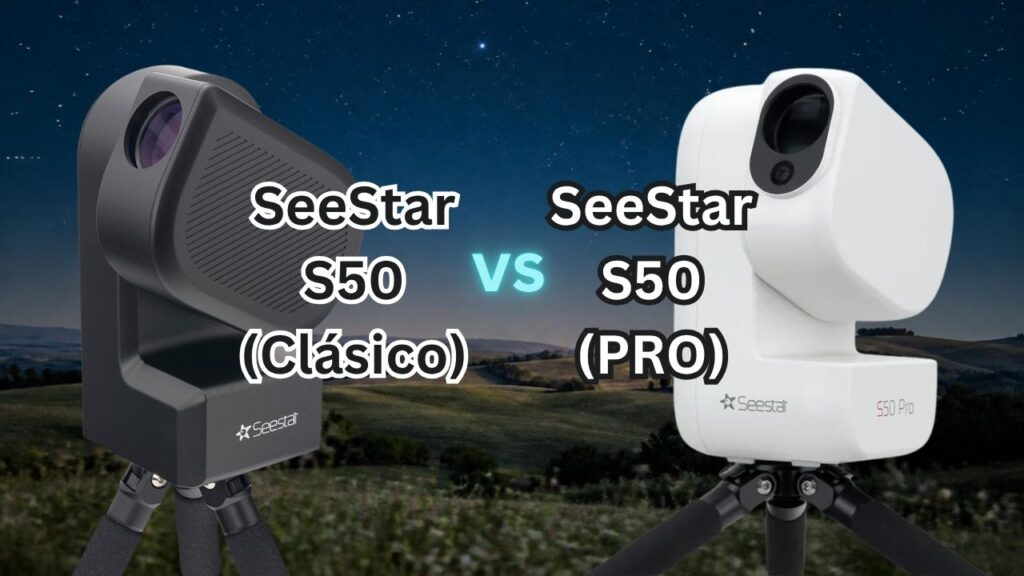
Before you spend double, here’s what actually changes between the two models
By Juan Pablo Martín | ASTRONOMIKA TV | August 2026
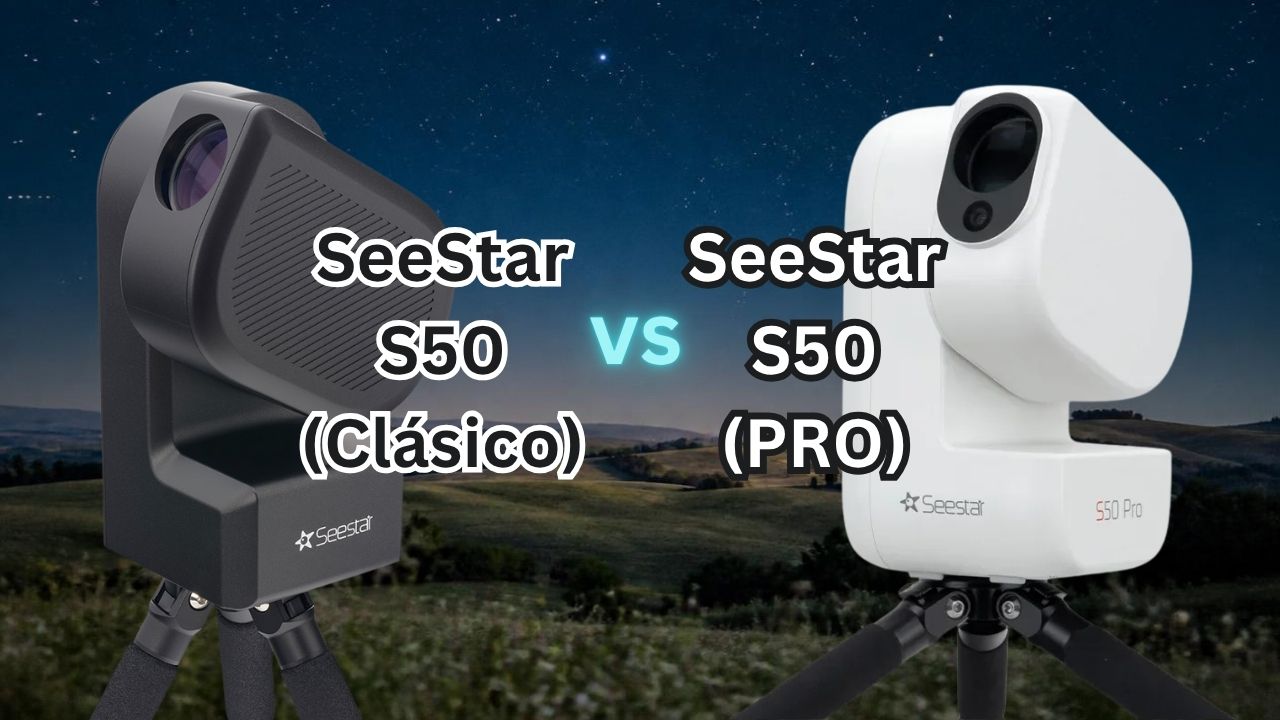
In August 2026 ZWO dropped the news that sent the whole niche into a frenzy: the Seestar S50 Pro, the upgrade to the smart telescope that opened the door to astrophotography for millions of people who had never touched a telescope before. And like every time something new hits the market, social media went crazy. Overnight, the previous model suddenly looks like it’s worth nothing and everyone wants to get rid of it.
We’re not jumping on that wave just because. If you’ve never used any kind of telescope and you’re deciding which one to start with, this article is for you. And if you already own the classic S50 and you’re wondering whether the jump is really worth it, it’s for you too. Let’s look at what actually changed, what’s pure marketing, and who each model really makes sense for. We want you to buy because it’s the right fit, not out of fear of missing out.
✦ ✦ ✦
First things first: price and availability already changed for good
Here’s a fact that doesn’t depend on your opinion of which model is better: as of August 2026, the ZWO Seestar S50 (Mexico | United States | Spain) classic is no longer being made. ZWO discontinued it, and from now on the only new units you’ll find are whatever inventory is still sitting on store shelves, or used units on eBay and secondhand marketplaces.
That’s not necessarily bad news. The S50 Pro is in presale at 900 dollars until September 15, 2026; after that date it jumps to 1,000 dollars. The classic, back when it was available new, cost between 500 and 550 dollars. That’s almost double the price, so before you pull out your card it’s worth understanding whether that difference actually translates into double the telescope.
Two cameras instead of one: finding objects stops being a headache
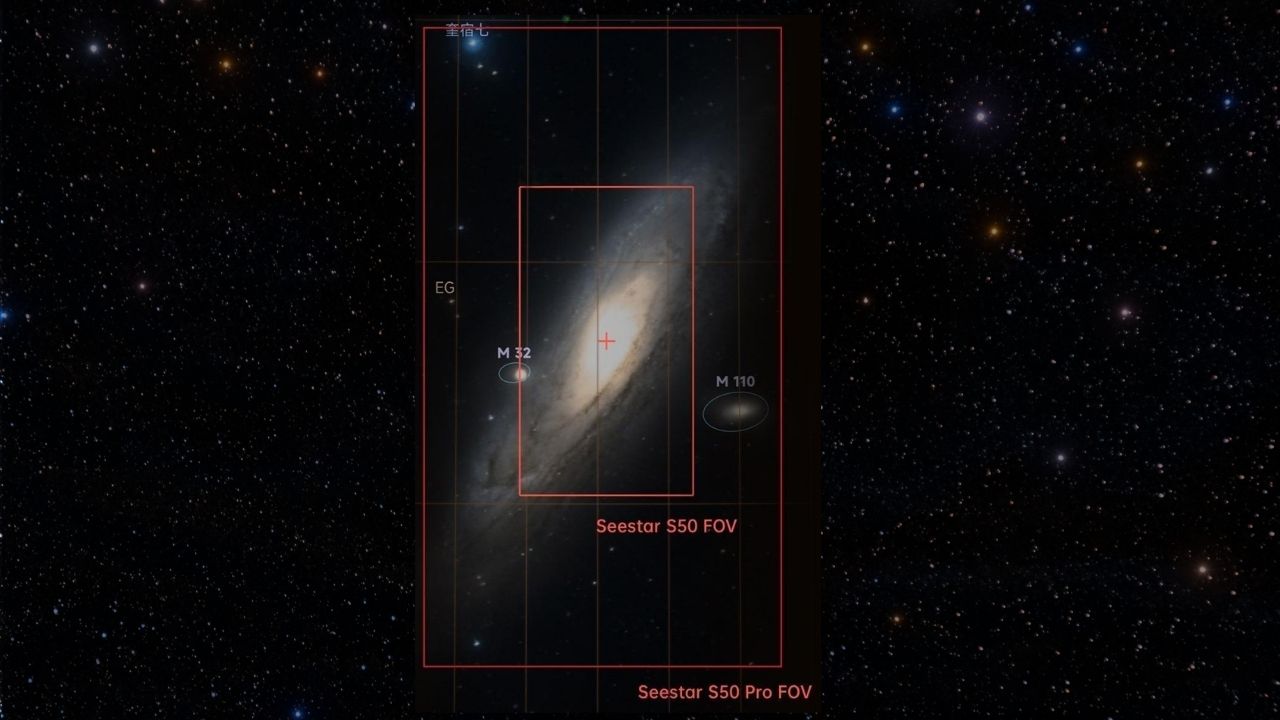
The most visible design change is that the S50 Pro packs two cameras into one body. Along with the telescopic zoom camera you already know, there’s now a wide angle camera right below it. That means you can see a much larger slice of the sky in a single frame and switch between the two views depending on what you’re looking for, which makes finding objects at night faster. The classic’s built in software already does a solid job finding objects on its own, but sometimes you needed patience.
This shows up especially with large objects. The Andromeda galaxy, for example, doesn’t fit whole in the classic S50’s frame. To get it all in, the classic relies on the mosaic function: it takes several shots of different sections and stitches them into one image, a process that takes a few minutes per section. The S50 Pro can achieve the same result with fewer shots and in less time, thanks to that wider field of view.
Different on the inside too: lenses, sensor and resolution
The classic S50 was a revolution in its day because it’s an apochromatic telescope with three lens elements, a design that greatly reduces color distortion compared to a simple telescope. The S50 Pro moves up to four lens elements, which translates into an even cleaner, truer image.
The most dramatic difference is in the sensor. The classic captures 2 megapixel images. The Pro comes with a Sony IMX585 sensor at 8 megapixels, four times the resolution. Looked at coldly, 2 megapixels looks perfectly fine on the screen of your phone or tablet, which is where most people end up viewing their photos anyway. But if you like to crop and zoom into part of an image before posting it, that’s where the difference shows: with the classic, that cropped section starts to look pixelated; with the Pro, it holds its sharpness because there’s a lot more information captured to begin with. The tradeoff for that extra resolution is heavier files that take up more space on your memory and take longer to upload.
✦ ✦ ✦
Why the classic S50 is still a smart buy
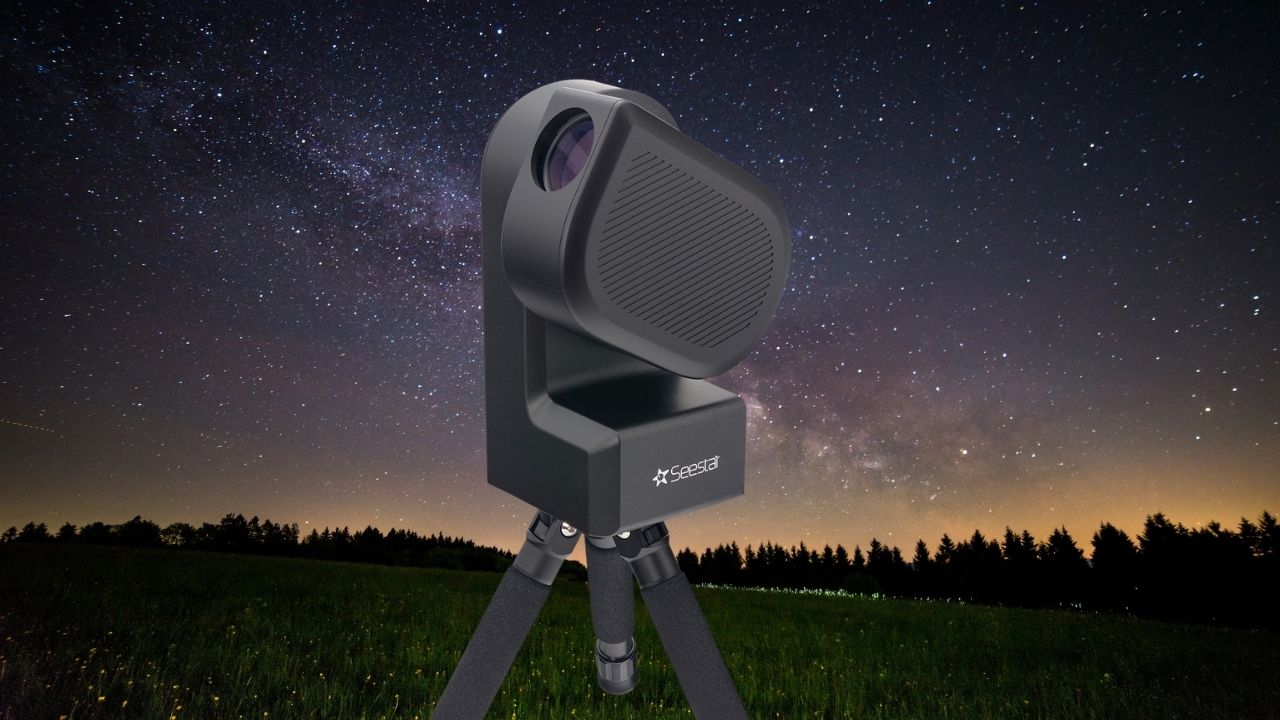
The aperture, which is what actually determines how much light the unit gathers, didn’t change between the two models: it’s exactly the same on both. That alone takes some weight out of the argument that the classic “fell behind”.
It has several concrete things going for it. Its 2 megapixel files are much lighter, so if sharing to social media quickly matters most to you, the classic gets you there fast without choking your phone or computer, at a 1080p resolution that’s exactly what you need for posting. Its software has been on the market for three years, it’s polished, stable, and ZWO keeps updating it. The S50 Pro, like any brand new hardware, will likely have a few software growing pains at launch that get ironed out over time, but right now the classic is the more reliable option. And since it’s on its way out of the market, you can find it at bargain prices; on secondhand forums it’s already going for around 300 dollars, a huge gap compared to the nearly 1,000 dollars of the new model.
What the S50 Pro brings that does justify the price for certain users
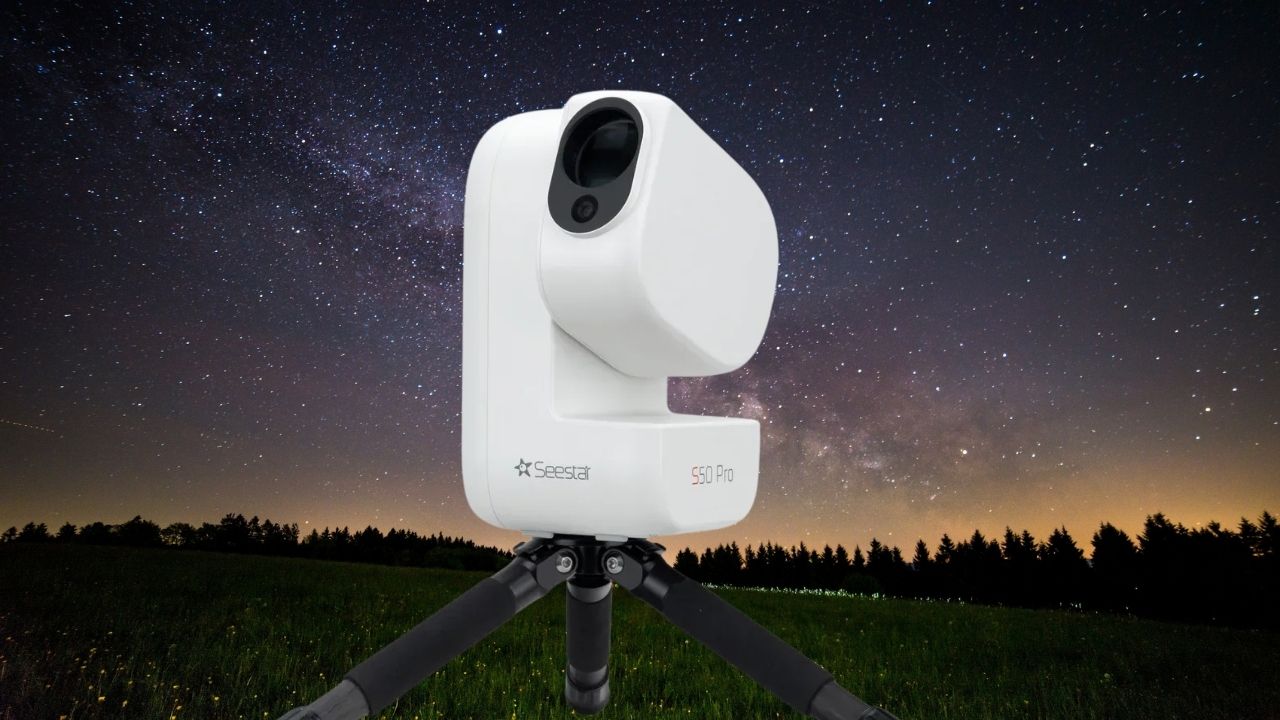
The ZWO Seestar S50 Pro (Mexico | United States | Spain) doesn’t just win on megapixels. Its Sony IMX585 sensor has less distortion and much more precise star tracking, something that really shows during long, multi hour sessions. The automatic processing also offers more adjustable settings for anyone who likes to get hands on with editing.
The solar filter switched from a pressure fit system to a magnetic one, making it more stable; on the classic it’s easy to accidentally touch the lens when mounting it. And the battery basically doubled: the classic runs between four and a half and five hours, while the Pro promises around nine hours, enough to cover a full night without relying on an external battery pack (though you can still hook a power bank to the classic and get the same result). That battery jump is exactly what explains why the Pro is a bit bigger and heavier than its predecessor.
✦ ✦ ✦
So, who is each one for?
After going through all of this, the decision comes down less to hype and more to what kind of user you are:
- If you’re at the curious or beginner stage and you’re not sure yet whether the hobby is for you, don’t overthink it: the classic S50 gives you the full experience for a fraction of the price.
- If you like posting your captures but only treat it as an occasional hobby, there’s no reason to spend more either. The classic covers you and then some.
- If you’re a content creator who needs to produce quality footage fast, the S50 Pro saves you editing time and gives you files that hold up better to cropping and zooming.
- If you’re into editing, gadgets, and digging into the details, the S50 Pro is the one that will keep you entertained exploring features for months.
If you already own the classic and don’t see a real need to upgrade, stick with it. It’s a capable piece of equipment that still performs beautifully, and over the coming months the used market is going to fill up with lightly used units at bargain prices, because a lot of people are going to sell theirs to buy the Pro without actually needing to.
If you don’t own any equipment yet and you’re not even sure a smart telescope is the right fit for you, before deciding between these two it’s worth reading our visual telescope vs smart telescope comparison, to understand whether you’d rather have the direct experience through an eyepiece or the automated photography that does the work for you.
The right question is never which telescope is better in the abstract. It’s which one actually solves what you’re going to use it for.
And if you’ve already made your choice and you’re putting together your first observation night, hit play on The Astronomer’s Saga, the ASTRONOMIKA BEATS album made to accompany the hours when the telescope is doing all the work and all you have to do is look up.
✦ ✦ ✦
Quick comparison: classic S50 vs S50 Pro
| Aspect | Seestar S50 (classic) | Seestar S50 Pro |
|---|---|---|
| Price | From ~300 USD (used) | 900 USD in presale, 1,000 USD after September 15, 2026 |
| Availability | Discontinued, used or remaining stock only | New, in presale |
| Cameras | One, telescopic | Two: telescopic and wide angle |
| Sensor / resolution | 2 megapixels | Sony IMX585, 8 megapixels |
| Lens elements (apochromatic design) | 3 elements | 4 elements |
| Aperture | 50 mm | 50 mm (same) |
| Body color | Black | White |
| Size and weight | More compact and lighter | Larger and heavier |
| Battery | 4.5 to 5 hours | ~9 hours |
| Solar filter | Pressure fit | Magnetic |
| Software | 3 years on the market, very stable | New, may need early fine tuning |
| File weight | Light, ideal for social media | Heavier, need more storage |
| Best for | Beginners and casual hobbyists | Content creators and editing enthusiasts |
Still not sure which one is for you?
We put together a quick quiz you can finish in under two minutes that tells you, based on how you spend your free time and how deep you like to get into the tech, which of the two models fits your profile best.Take the quiz in English →Hacer el quiz en español →
✦ ✦ ✦
Frequently asked questions about the Seestar S50 Pro and the classic S50
What’s the main difference between the Seestar S50 and the S50 Pro?
The main difference is the sensor and the camera setup. The S50 Pro has a Sony IMX585 sensor at 8 megapixels and a second wide angle camera, while the classic has a single telescopic camera at 2 megapixels. Aperture, which determines how much light the unit gathers, is the same on both models.
Can I still buy the classic Seestar S50 new?
ZWO discontinued the classic S50 in August 2026 with the launch of the Pro. It’s no longer being manufactured, so whatever you find new will be remaining store inventory, and beyond that you’ll only find it used on platforms like eBay or secondhand marketplaces.
How much does the Seestar S50 Pro cost?
The S50 Pro is in presale at 900 dollars until September 15, 2026. After that date, the price rises to 1,000 dollars. The classic S50, back when it was available new, cost between 500 and 550 dollars.
Is it worth upgrading if I already own the classic S50?
It depends on how far you want to push your photos. If you use your Seestar casually and just share your shots on social media, the classic still performs the same as always and there’s no rush. If you produce content regularly or love editing your images in depth, the Pro’s higher resolution sensor and bigger battery do justify the cost.
Is the Pro’s 8 megapixel resolution actually better for posting on social media?
To view the full photo on your phone or tablet, the classic’s 2 megapixels look perfectly fine, and load faster too. The real advantage of the Pro’s 8 megapixels shows up when you want to crop and zoom into a specific part of the image: that’s where the classic starts to look pixelated and the Pro holds its sharpness.
How long does each model’s battery last?
The classic S50 runs between 4.5 and 5 hours on its internal battery. The S50 Pro promises around 9 hours, almost double, enough to cover a full night of observation without relying on an external battery. The classic can also be hooked up to a power bank to extend its runtime.
What does the mosaic function do, and what changed with the Pro?
Mosaic mode takes several shots of different areas of the sky and stitches them into one image, useful for large objects that don’t fit in a single frame, like the Andromeda galaxy. The classic S50 needs more shots and more time to pull it off. The S50 Pro, thanks to its wide angle camera, can complete the same mosaic with fewer shots and in less time.
Is the Seestar S50 Pro good for beginners who have never used a telescope?
It works great for beginners, but you don’t need to spend on it just to try out the hobby. The classic S50 offers the same ease of use, the same automatic framing software, and the same aperture, at a fraction of the price. The Pro makes more sense once you already know you’re sticking with the hobby and want to produce higher quality content.
Why is the S50 Pro white while the classic is black?
The classic’s black finish blends into the dark at night, something a lot of users prefer. The Pro’s white finish aims for the opposite: to stay more visible in low light and help you avoid tripping over it, and as a bonus it reflects more sunlight during solar photography sessions, so it heats up less than a black body under direct sun.
Where can I find a cheap classic S50 now that the Pro is out?
Since a lot of users are selling their classic S50 to buy the Pro, the secondhand market is going to fill up with lightly used units at good prices, already going for around 300 dollars on specialized forums. It’s worth checking Facebook Marketplace, eBay, and astrophotography groups before paying full price for the Pro if your budget is tight.
Watch the full video
If you’d rather watch it live, with side by side comparisons and real captures from each unit, here’s the full YouTube video where we ran this breakdown:
This article contains affiliate links. If you purchase through them, I earn a small commission at no extra cost to you.
Source
Field analysis and comparison by Juan Pablo Martín, ASTRONOMIKA TV, based on hands on use of the classic Seestar S50 and the official Seestar S50 Pro specifications published by ZWO at its August 2026 launch.