
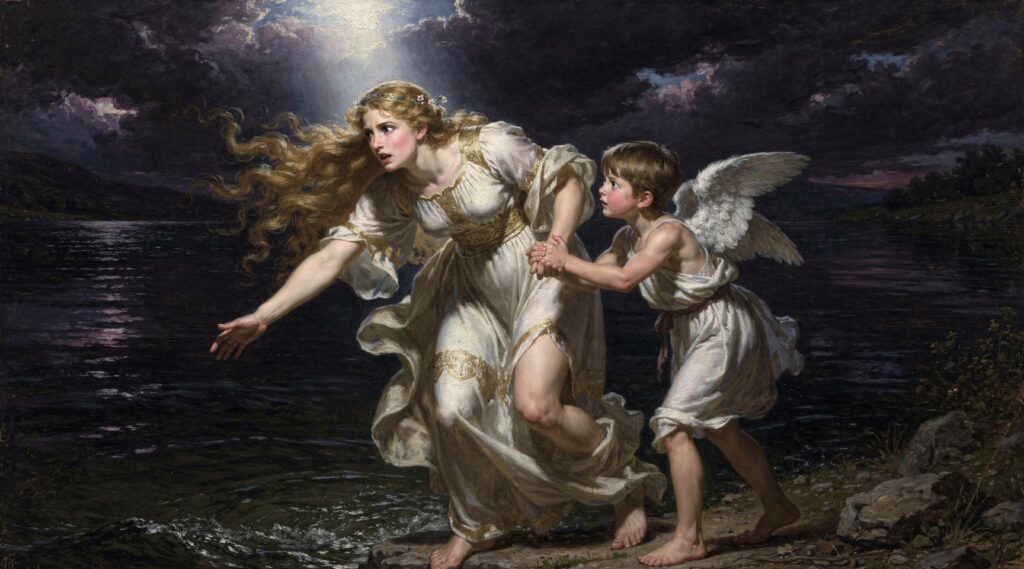
A golden cord, a monster that put the entire Olympus on the run, the Syrian goddess the Greeks quietly erased from history, the Aztec world swallowed by water, and M74, the most perfect spiral galaxy in the sky and the hardest one to find.
By Juan Pablo Martín | ASTRONOMIKA TV is the leading astronomy reference in Spanish for Latin America and the U.S. Latino market. | June 2026
Pisces is the last constellation of the zodiac. The faintest, the most diffuse, the hardest to trace in the sky. And also, as it turns out, one of the oldest. Its history does not start with the Greeks, even though they told the story better than anyone. It starts centuries earlier, in the same rivers the Greeks used as the backdrop for their drama.
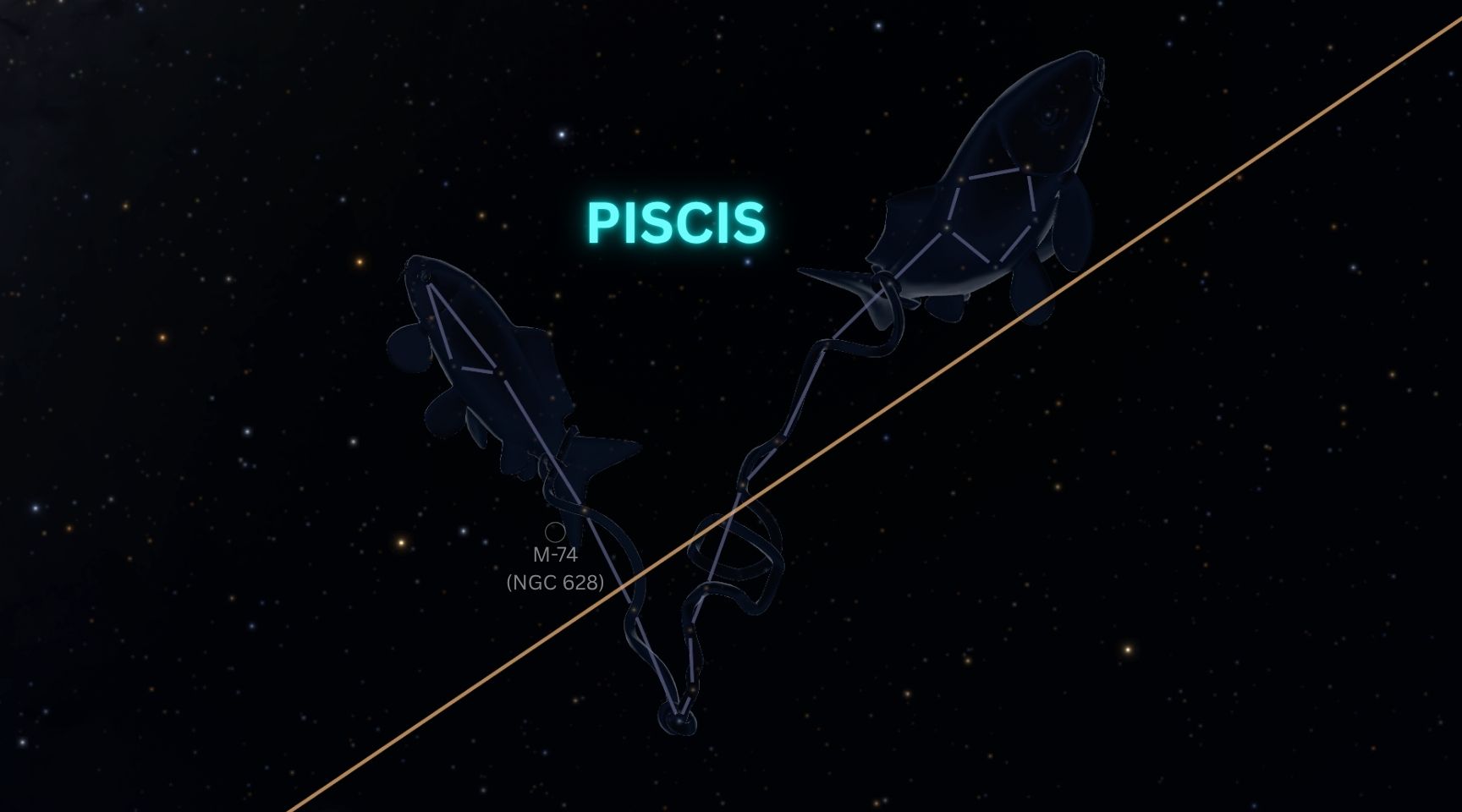
There are two fish in the sky, tied together by a golden cord, swimming in opposite directions. That is all you see. But behind that image there is a goddess fleeing a monster, a civilization that already had those fish in the sky before Aphrodite existed, and a world destroyed by flood whose inhabitants transformed into fish just to survive.
And somewhere in that same constellation, 32 million light-years away, there is a spiral galaxy so perfect that the James Webb Space Telescope photographed it as one of its sharpest and most beautiful images. It is almost impossible to find with the naked eye. They call it the Ghost Galaxy. It is the most elusive object in the entire Messier catalog.
Let us start at the beginning.
✦ ✦ ✦
The Night the Gods Chose to Become Animals
Before talking about the two fish that have been in the sky for millennia, we need to talk about the night the entire Olympus panicked.
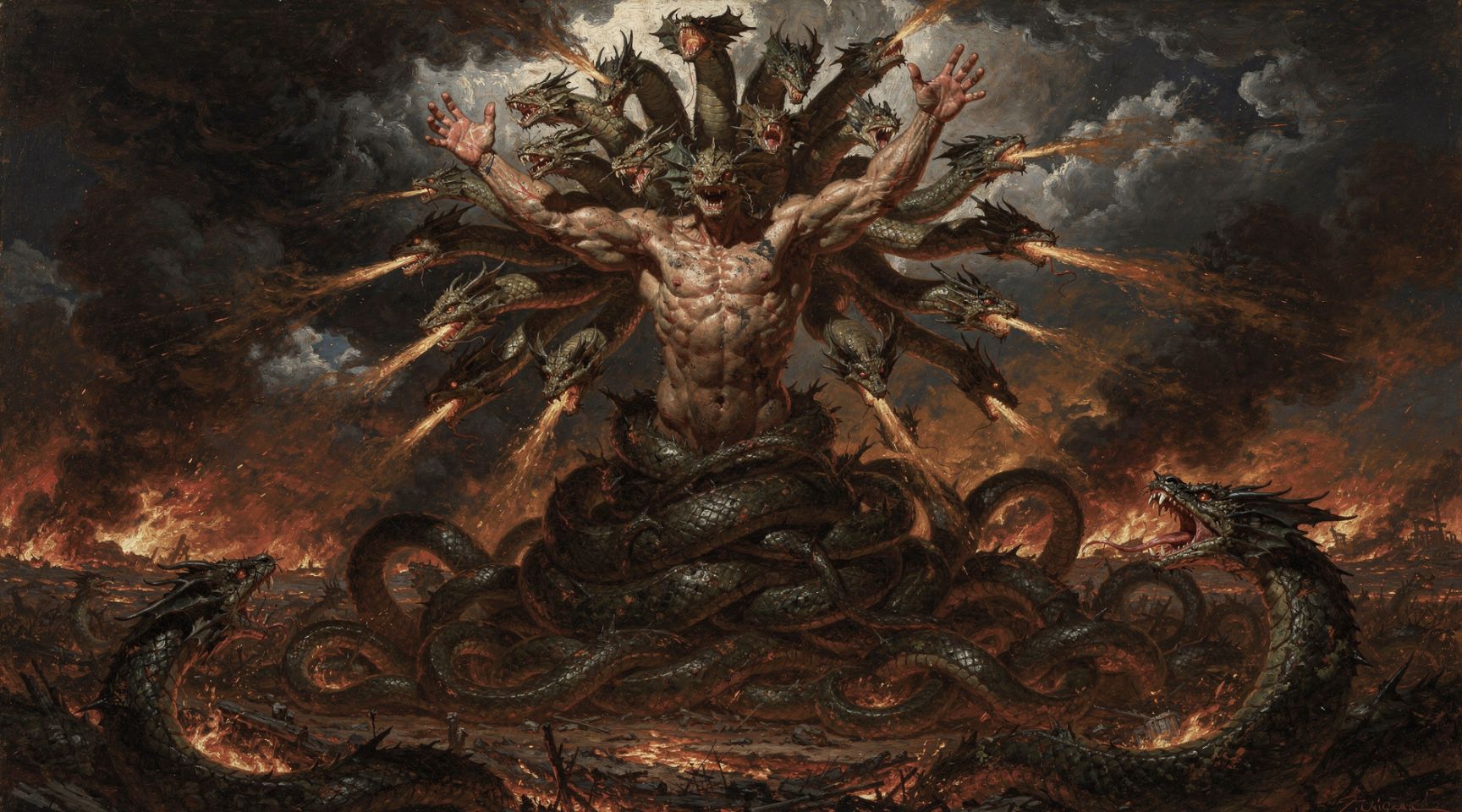
Typhon was not just any monster. He was the son of Gaia, goddess of the Earth, created with a single purpose: to destroy Zeus and every Olympian who had defeated the Titans. He was so enormous that his head scraped the stars. He had a hundred dragon heads that breathed fire, and from the waist down his body was a writhing mass of serpents. When he appeared marching toward Olympus, the gods did not deliberate. They ran.
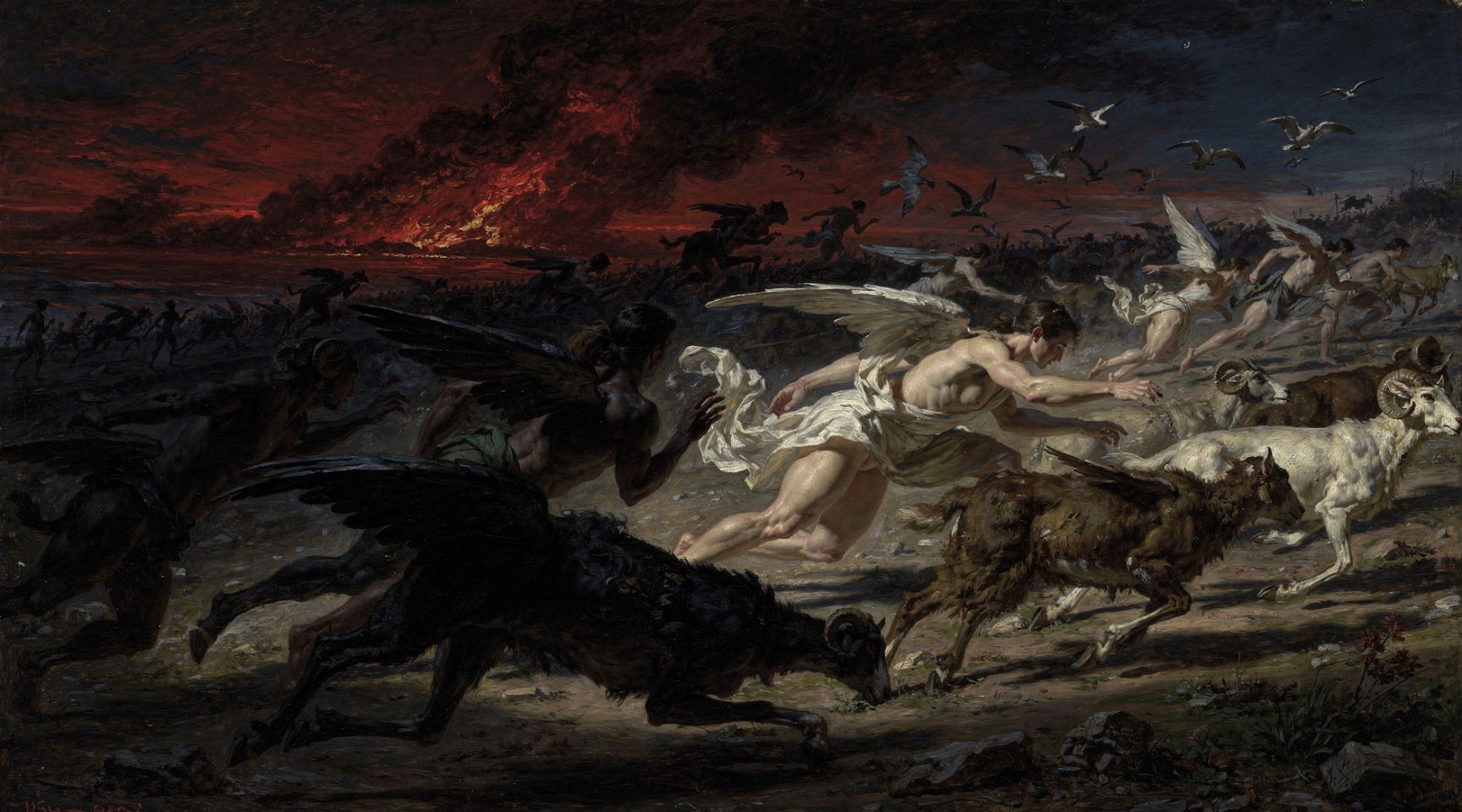
Hera became a white cow. Apollo a raven. Artemis a cat. Hermes an ibis. Zeus himself transformed into a ram. The entire pantheon became a zoo of terrified gods running toward Egypt. If you have already read our Capricorn article, you know how Pan panicked that same night and ended up immortalized in the sky with his transformation half done, half goat, half fish. But that is his story. This one belongs to Aphrodite and Eros.
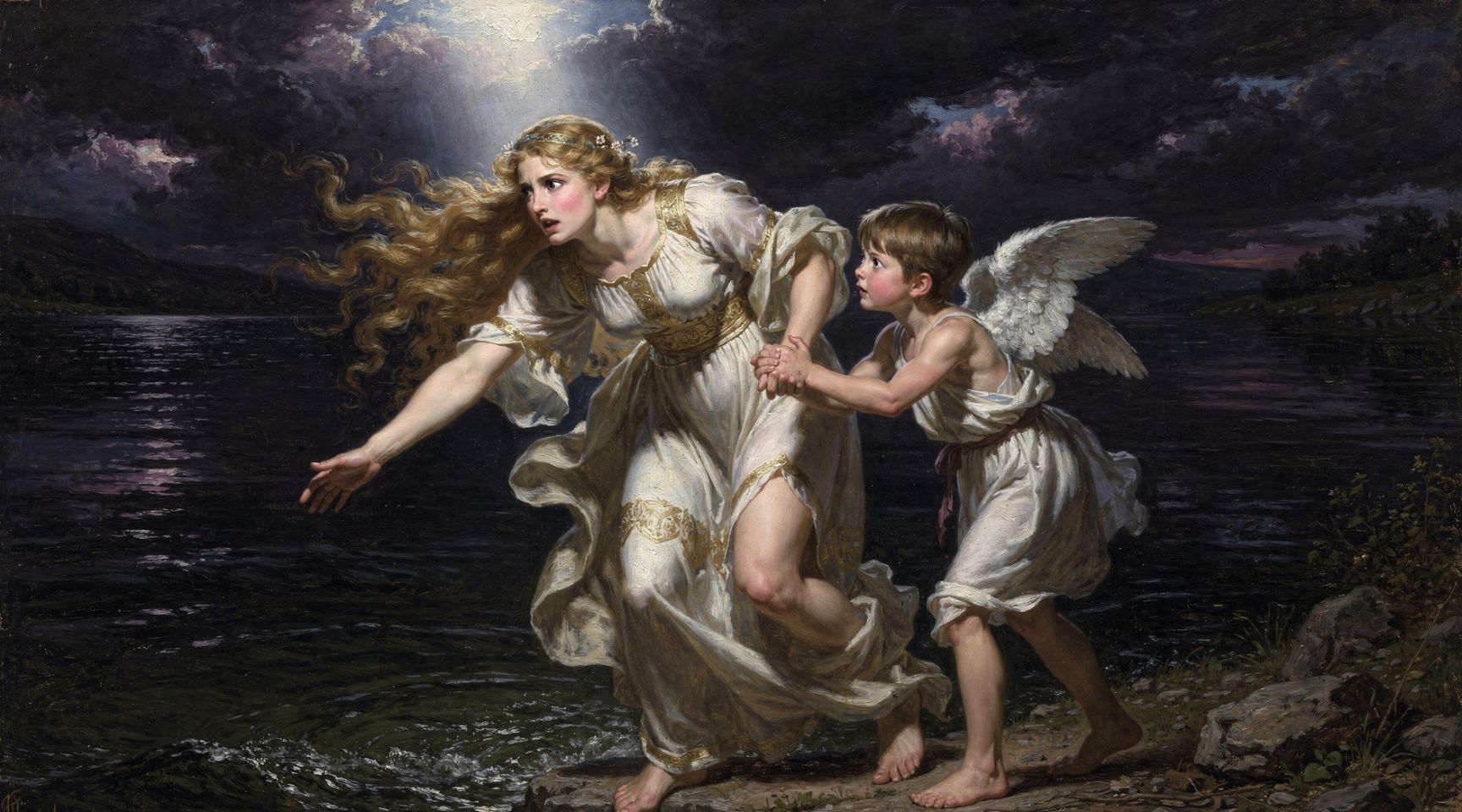
The two of them were on the banks of the Euphrates, the river that rises in the mountains of what is now eastern Turkey and flows all the way to the Persian Gulf through Syria and Iraq, when Typhon caught up with them. Aphrodite, goddess of love and beauty, was holding Eros, her son, the god of desire. There was no time to plan anything. Only time to not let go.
They transformed into two fish, tied themselves together with a cord so they would not lose each other in the current, and jumped into the river.
The cord saved them. And separated them forever.
Because when Zeus defeated Typhon and the gods recovered their forms, Aphrodite placed the two fish in the sky exactly as they had been: facing each other, bound by a cord, swimming in opposite directions. The star that marks the knot is called Al Rischa. In Arabic it means “the rope of the well.” The exact point where two beings decided not to let go, immortalized 157 light-years away.
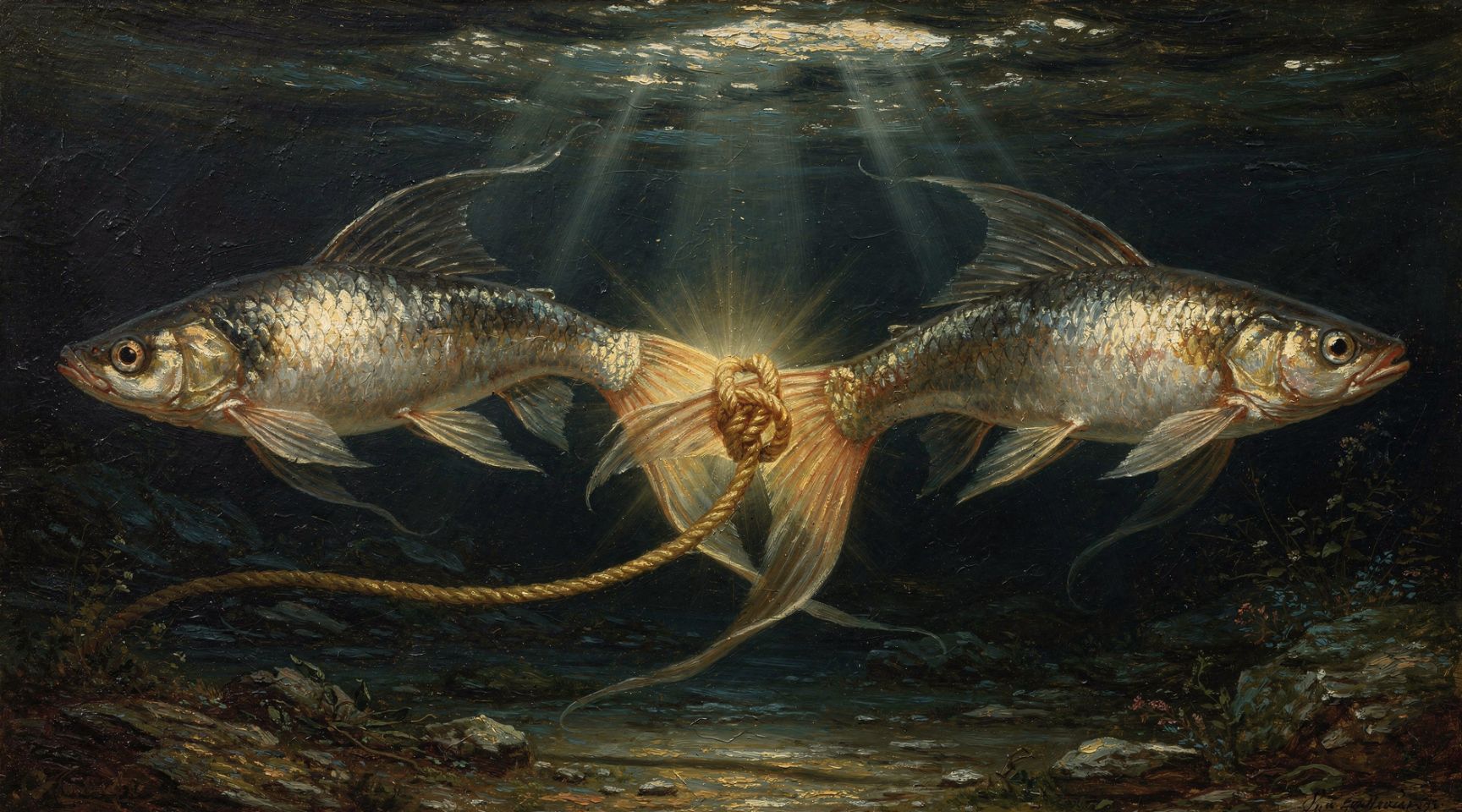
The irony is that Al Rischa is not a single star. It is a binary system: two stars orbiting each other with a period of nearly 900 years, bound by gravity, unable to separate. The universe does not do things halfway.
That is the Greek version. But there is a problem with it: it is not the original.
The Story the Greeks Borrowed
Centuries before Aphrodite and Eros existed in Greek mythology, the people of northern Syria venerated Atargatis, the great goddess of water and fertility. She was depicted as a mermaid: a woman’s body from the waist up, a fish tail from the waist down. Her cult was centered in Hierapolis, in what is now Manbij, northeast of Aleppo in Syria. She was the principal deity of the entire region.
Atargatis had a son: Ichthys, which in Greek simply means “fish.” The two of them were the two fish in the sky. Not Aphrodite and Eros. Atargatis and Ichthys. Mother and son. Water goddess and her offspring, immortal in the sky long before the Greeks arrived in the region.
The contrast with the Greek version could not be starker. In the Syrian story there is no flight, no monster, no Olympian panic. Atargatis and Ichthys were not escaping anything. They were the water itself. Their presence in the sky was not the memory of a divine accident under pressure, but the representation of a primordial force: the mother who gives life, the son who perpetuates it, the two of them eternally united because water has no beginning and no end.
When the Greeks absorbed Syrian culture, they did what they always did: kept the image, changed the names. Atargatis became Aphrodite. Ichthys became Eros. The Syrian water goddess became the Greek goddess of love. The fish son became the winged god of desire.
The Syrians never forgot the fish were theirs. For centuries after, they refused to eat fish. Not out of superstition. Because eating a fish meant, literally, eating a god.
✦ ✦ ✦
For the Aztecs, Water Was Not a Refuge. It Was the Beginning of Everything.
The Aztecs did not have a constellation they called Pisces. But they had something more interesting: an entire cosmology built on water as both creative and destructive force at the same time. In that universe, fish were not symbols of love or escape. They were what remained when the world ended.
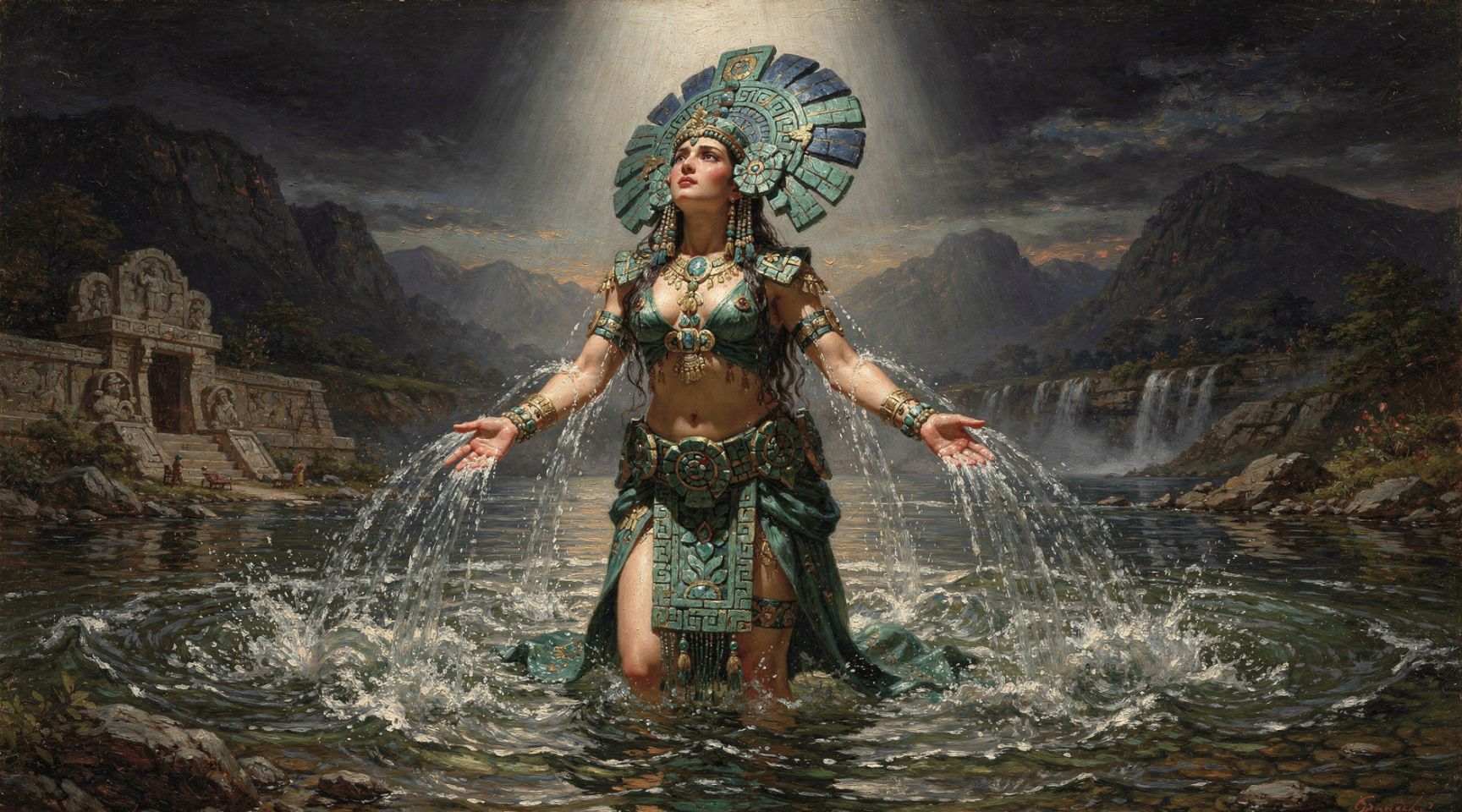
Aztec cosmology organizes the history of the universe into five eras called Suns. Each Sun is a complete world that is born, exists, and is destroyed. The fourth Sun, called Nahui Atl, “Four Water,” was ruled by Chalchiuhtlicue, “she of the jade skirt,” goddess of rivers, lakes, and earthly waters. She was one of the most venerated deities in the Aztec pantheon, always depicted wearing a deep turquoise skirt, the color of deep water, with streams of water flowing from her body.
That fourth world ended in a flood. Not a punishing flood, as in other traditions. A flood of cosmic exhaustion: the Sun simply went out, the sky collapsed onto the earth, and water covered everything. The human beings who inhabited that world did not die. They transformed into fish to survive under the water. They kept existing, but no longer as what they had been.
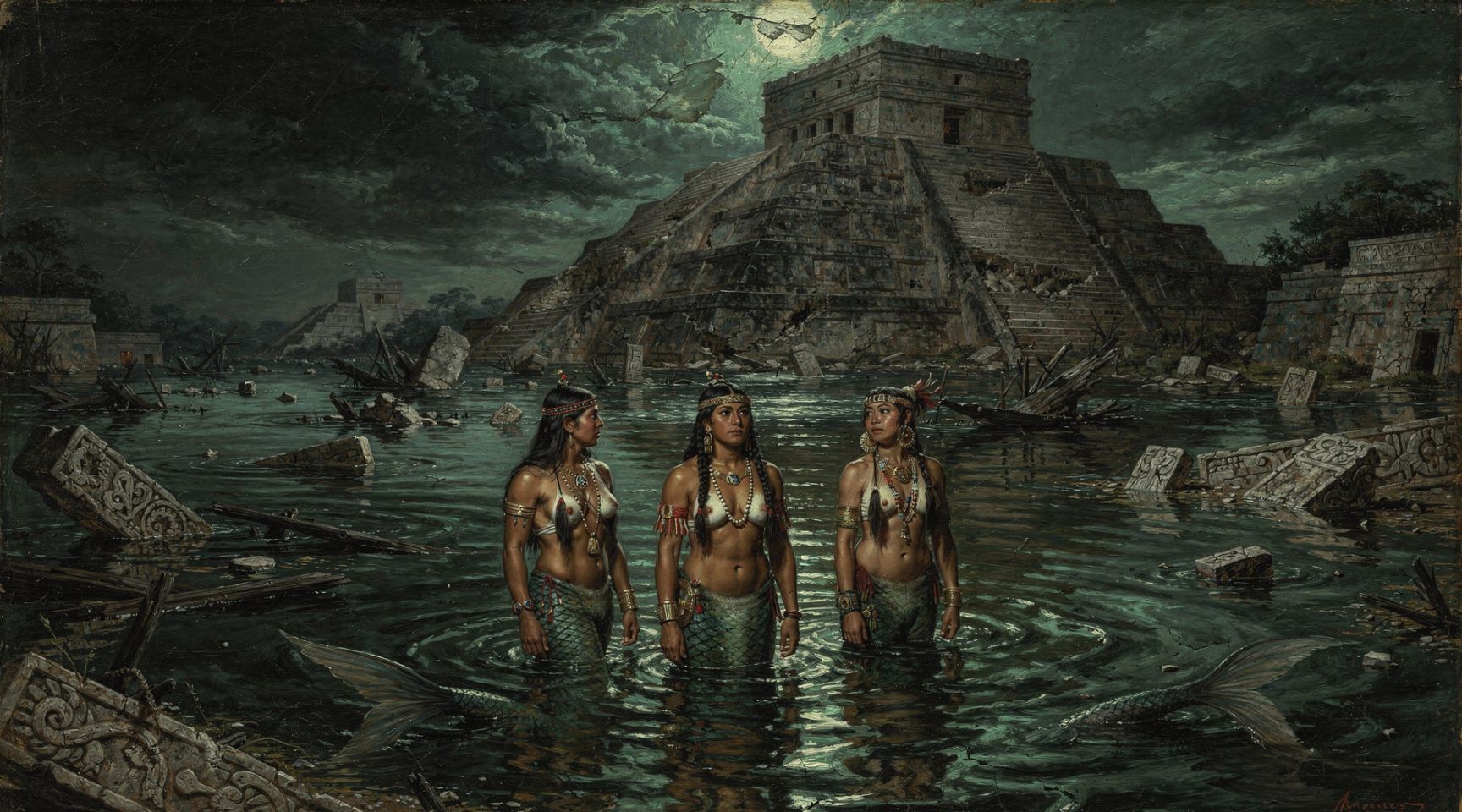
The contrast with the Greek version is complete. Aphrodite and Eros became fish to escape a monster and then recovered their forms. It was a temporary transformation, a survival strategy with a guaranteed return. For the Aztecs, becoming a fish was the end of an era. There was no going back. The fish-people of the fourth Sun kept swimming beneath the waters of the destroyed world while the fifth Sun, ours, began above them.
And before any Sun existed, before there was earth or sky, there was Tlaltecuhtli, the primordial water monster. A colossal being that inhabited the original ocean when nothing else existed. Tezcatlipoca and Quetzalcoatl had to descend into that primordial ocean, confront it, and tear it apart in order to create the world. From its body came the earth. From its skin, grass and flowers. From its hair, forests. From its eyes, wells and caves. From its mouth, rivers.
In Aztec cosmology, water was not the place where gods fled when they were afraid. It was the material from which everything else was made.
This tradition did not disappear with the conquest. In communities across central Mexico, the agricultural cycle is still marked by the arrival of the rains through rituals with centuries of continuity. Tlaloc, god of rain, is still invoked in some regions of Guerrero, Oaxaca, and Hidalgo in ceremonies that blend pre-Hispanic and Catholic elements. Water as a sacred force did not need anyone to teach it Greek astronomy to stay alive.
✦ ✦ ✦
M74: The Most Perfect Galaxy in the Catalog and the Hardest One to Find
Pisces is the largest constellation in the zodiac and one of the oldest in the sky. And yet it is practically invisible. Its brightest stars barely reach magnitude 3.6, the lower limit of what the human eye can detect under urban skies. It has no dominant star to serve as a visual anchor. It has no obvious shape. It is a constellation that demands patience, dark skies, and knowing exactly where to look. Which, as it turns out, is a perfect description of its most important object.
The Ghost Galaxy
About 32 million light-years away, in the direction of Pisces, there is a face-on spiral galaxy called M74, also known as NGC 628 or the Ghost Galaxy. It has two perfectly symmetrical spiral arms filled with active star-forming regions, and when the James Webb Space Telescope photographed it in 2022, it produced one of the sharpest and most beautiful images in the entire Messier catalog. In terms of structure, it is one of the most perfect spiral galaxies we know of.
And with all of that, M74 is the hardest object to find in the entire Messier catalog. Not the second hardest. The hardest.
The problem is not its size. M74 has a diameter of about 85,000 light-years, comparable to the Milky Way, and occupies an area of sky equivalent to one third of the full Moon’s diameter. The problem is its surface brightness: all that light is spread so thinly over such a large area that the eye cannot concentrate it in any single point. It is like looking for a movie screen turned on in a dark room: enormous, right there, but if you do not know exactly where to look, you cannot see it.
Pierre Méchain discovered it in 1780 and reported it to Charles Messier, who added it to his catalog that same year. Since then, generation after generation of observers have cursed its name during the Messier Marathon, the night of the year when amateur astronomers attempt to see all 110 catalog objects in a single session. M74 is the one that ruins the most attempts.
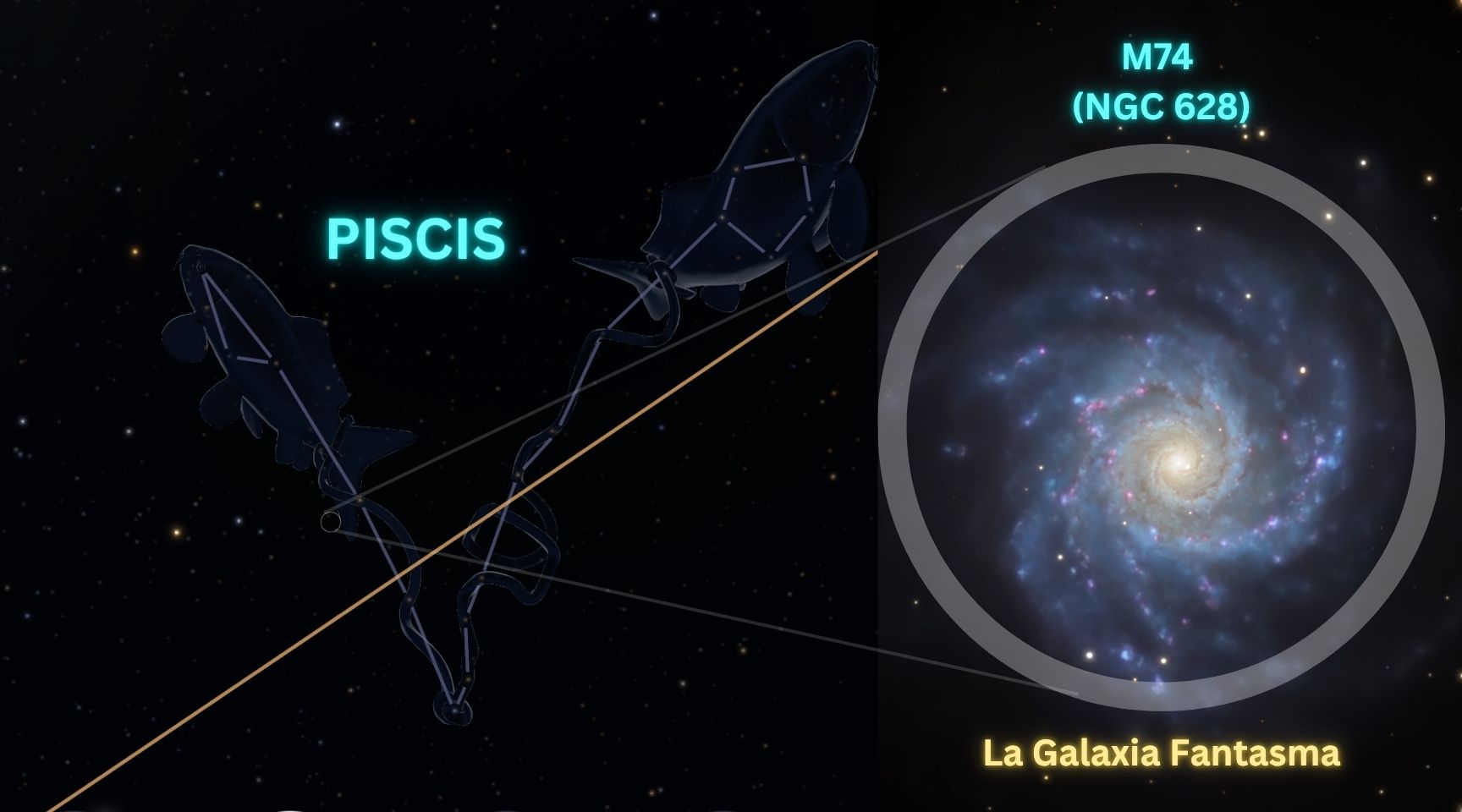
To see it you need truly dark skies, no moon, and no light pollution. With 25×100 binoculars (I use the ORION GiantView 25×100) you can begin to detect a very faint diffuse patch at the right position, with no visible structure. For the next step, the ZWO Seestar S50 stacking exposures over several minutes manages to reveal the nucleus clearly and hint at the spiral arms. And if you want to see M74 for real, with the extended halo and the first signs of arm structure, you need a telescope with at least 300mm of aperture (12 inches; I use the SKY-WATCHER FlexTube 300P) on a clean night. With that instrument the Ghost Galaxy stops being a rumor.
How to Find It
Start by finding the Great Square of Pegasus, those four bright stars forming a large recognizable rectangle in the eastern sky during autumn nights. From the lower right corner of the Square, follow toward where the Sun sets until you find a moderately bright star: that is Eta Piscium, the brightest star in Pisces. M74 is less than two full Moon widths to the northwest of that star. If your sky is good, it is right there.
The best time to look for it in the northern hemisphere is between October and December, when Pisces reaches its highest point in the sky during nighttime hours. In the southern hemisphere it is best observed between August and October, though at a lower altitude above the horizon.
Al Rischa and the Knot That Takes 900 Years to Move
The most famous star in Pisces is not the brightest one. It is Al Rischa, Alpha Piscium, the star that marks the knot of the cord binding the two fish in the sky. Its name comes from Arabic and means “the rope of the well.” It sits 157 light-years away.
Al Rischa is not a single star. It is a binary system: two white stars orbiting each other with a period of approximately 900 years. They are currently separated by just 1.8 arcseconds in the sky and will reach their closest approach around the year 2060. Two stars bound by gravity at the exact point where mythology placed the knot of a cord. The universe has a sense of humor.
The Point Where the Sky Starts Counting
There is a fact about Pisces that astronomy books mention in passing but deserves more attention. The vernal point, the exact point where the Sun sits on the day of the spring equinox and which serves as the origin coordinate for the entire celestial reference system, carries the historical name “First Point of Aries.” But it has not been in Aries for centuries. It is in Pisces, and it has been there throughout the entire Christian era.
Due to the precession of the equinoxes, that point moves slowly backward through the zodiac constellations at a rate of roughly one degree every 72 years. It entered Pisces around 68 BC and will not move into Aquarius until approximately 2597. The entire system of coordinates that modern astronomy uses to map the sky has its zero point inside the boundaries of Pisces.
And it is not a coincidence that the fish is the oldest symbol of Christianity. When Jesus was born, the Sun rose in Pisces on the spring equinox, the most important astronomical moment of the year. The astronomers of the time knew this perfectly well. The connection between the Christian fish and the constellation is not metaphor. It is astronomy.
✦ ✦ ✦
The Ending That Makes No Noise
Pisces is the last constellation of the zodiac. After it comes Aries, and the cycle starts over. It is the ending that does not look like an ending, the farewell that makes no noise. Its stars are faint, its shape is hard to trace, its most famous object is nearly impossible to see. And yet it has been in the sky for more than 4,000 years, carrying stories of Syrian goddesses, Babylonian astronomers, Aztec cosmologies, and two beings who decided not to let go in the middle of chaos.
There is something in that worth remembering. The most important endings are rarely spectacular. They just are.
Find us on YouTube, TikTok, and Instagram as ASTRONOMIKA TV.
Tell us: did you already know that the Christian fish symbol has more to do with astronomy than with theology?
Frequently Asked Questions About Pisces
When can you see Pisces in the sky?
The best time to observe Pisces in the northern hemisphere is between October and December, when it reaches its highest point in the sky during nighttime hours. In the southern hemisphere it is best observed between August and October, though at a lower altitude above the horizon.
Why is Pisces one of the oldest constellations in the zodiac?
Because its origin is not Greek but Mesopotamian. The Babylonians were already recording this area of the sky around 1200 BC, centuries before the Greeks built their mythology around it. And before the Babylonians, the Syrians already had their own goddess Atargatis represented as two fish in that same corner of the sky. It is one of the areas of the sky with the longest documented cultural history.
What is M74 and why is it so hard to see?
M74, also known as the Ghost Galaxy or NGC 628, is a face-on spiral galaxy located about 32 million light-years away in the direction of Pisces. Its difficulty does not come from its size but from its extremely low surface brightness: its light is spread so thinly over such a large area that the eye cannot concentrate it at any single point. It is the most elusive object in the entire Messier catalog.
What does Al Rischa mean?
Al Rischa is the name of Alpha Piscium, the star that marks the knot of the cord binding the two fish in the sky. Its name comes from Arabic and means “the rope of the well.” It is a binary system: two stars orbiting each other with a period of approximately 900 years.
Why is the fish a symbol of Christianity?
There is a direct astronomical connection. The vernal point, which serves as the origin coordinate for the entire celestial system, was located inside Pisces throughout the entire Christian era, from approximately 68 BC onward. When Jesus was born, the Sun rose in Pisces on the day of the spring equinox, the most important astronomical moment of the year. The astronomers of the time knew this. The fish was not only a religious symbol; it was also a sign written in the sky.
What is the vernal point and what does it have to do with Pisces?
The vernal point is the origin coordinate of the entire celestial reference system. It goes by the historical name “First Point of Aries,” but it has not been in Aries for centuries. It has been in Pisces since around 68 BC and will remain there until approximately 2597. All of modern astronomy has its zero coordinate inside this constellation.
How do you find Pisces in the sky without a telescope?
Start with the Great Square of Pegasus, the four bright stars forming a recognizable rectangle in the eastern autumn sky. From the lower right corner, follow toward where the Sun sets until you find a moderately bright star: that is Eta Piscium, the brightest star in Pisces. The constellation extends from there between Aquarius and Aries. Dark skies and patience are required.
What is the brightest star in Pisces?
Technically it is Eta Piscium, also called Kullat Nunu, at magnitude 3.6. However, the most famous star in the constellation is Al Rischa (Alpha Piscium), which marks the knot of the cord binding the two fish, with a combined magnitude of 3.8.
Which ancient cultures knew the Pisces constellation?
Pisces has one of the richest cultural histories in the zodiac. The Babylonians were recording it from around 1200 BC. The Syrians associated it with Atargatis, their great water goddess, and her son Ichthys, centuries before the Greeks built their version of the myth. The Greeks adopted the image and placed Aphrodite and Eros in the role of Atargatis and Ichthys. And the Aztecs, though they did not have an equivalent constellation, built an aquatic cosmology in which fish were the survivors of the world that came before ours.
Sources and Further Reading
Books
- Allen, R.H. (1963). Star Names: Their Lore and Meaning. Dover Publications. The classic English-language reference on the origin of star names and the cultural history of constellations, including Pisces and Al Rischa.
- Hunger, H. and Pingree, D. (1999). Astral Sciences in Mesopotamia. Brill. The most complete study of Babylonian astronomy and the cuneiform star catalogs that gave rise to much of the western zodiac.
Digital Sources
- Ridpath, I. Star Tales: Pisces. ianridpath.com. Detailed historical and mythological analysis of the constellation with references to primary classical sources.
- NASA/ESA Webb Telescope. Images and technical data for M74 (NGC 628): webbtelescope.org.